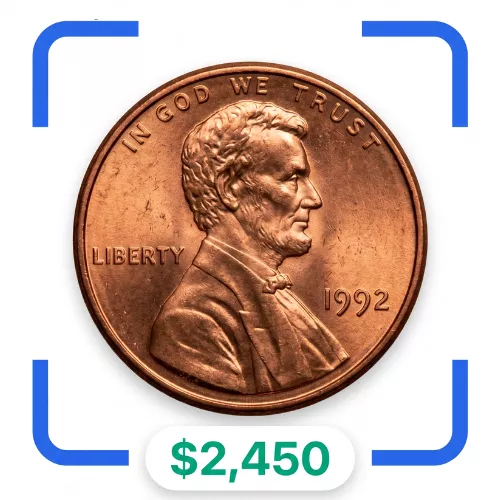
Valuable Pennies Still Pass Through People's Hands Every Day
Between the Wheat Cent (1909–1958) and the Lincoln Memorial and Shield Cent (1959–present), dozens of varieties sell at auction for thousands to hundreds of thousands of dollars. Doubled dies, Close AM spacing errors, wartime bronze and steel transitional errors, missing mint marks, and rare high-grade survivors all appear on this list — with verified sale prices from $2,415 up to $840,000. A handful of these still show up in pocket change. This page gives you a merged filter-and-search tool, a self-check tool, the complete Top 100 table, and a guide covering what actually drives the value.
Last updated: August 12, 20263 Pennies Most Likely to Turn Up in Pocket Change
Billions of these were struck and never pulled from circulation. Check any 1990s penny in your change.
Do I Have a Valuable Penny?
Enter your coin's details and we'll check it against the Top 100 list for possible matches.
Complete Top 100 Most Valuable US Pennies
Two Top lists in one table: Wheat Cents (1909–1958) and Lincoln Memorial/Shield Cents (1959–present). All prices are verified auction results. Click any row for details.
Not sure which one you are holding? penny worth money checker reads the date and mint mark straight from a photo.
| # | Penny | Series | Grade | Auction | Price |
|---|
I Think I Have One — Now What?
If your coin looks like a match for something on the list, don't rush to eBay yet. A raw, unauthenticated coin sells for a fraction of the same coin certified. Here's the order to go in.
Stop handling it
Hold coins by the edge only. Never wipe, rinse, polish, or dip in anything. A cleaned coin is worth 30–80% less and receives a permanent "Cleaned" notation on the grading slab. Slide it into a non-PVC flip or a cardboard 2x2 holder until you're ready to send it out.
Verify with a photo tool first
Before paying $20–$40 for professional grading, confirm you actually have the variety you think you have. Upload a clear obverse and reverse image to a penny worth money checker to narrow down the variety and skip the jargon. This costs nothing and rules out obvious mismatches.
Submit to PCGS or NGC for grading
If the coin still looks like a match, send it in. Standard tier at PCGS or NGC runs $20–$40 per coin with a wait of several weeks. Economy is cheaper but slower. Certified coins routinely sell for 30–80% more than raw examples, and grading also authenticates the coin — critical for varieties like the 1914-D and 1909-S VDB where counterfeits are common.
Choose the right selling venue
Under $500: eBay works, but expect a 13–15% total fee load and buyer skepticism on raw coins. $500–$5,000: GreatCollections or Heritage weekly auctions are the standard, with lower fees and serious bidders. Above $5,000: consign to Heritage Auctions or Stack's Bowers signature sales — they'll get you top dollar but take a seller commission. Never pawn shop or "cash for gold" storefront a rare penny; they pay melt or bullion value at best.
Watch for counterfeits and altered coins
The most-forged pennies are the 1909-S VDB, 1914-D, 1943 Bronze, and 1955 DDO. Common tricks include adding an S or D mintmark to a Philadelphia coin, copper-plating a 1943 steel cent, and altering the date on a 1948 to look like 1943. A magnet test alone eliminates most 1943 fakes (real 1943 bronze does not stick; a plated steel penny does). For anything above a few hundred dollars, trust the grading service — not the seller, not your loupe.
Understanding What Makes a Penny Valuable
Key Dates vs. Error Varieties vs. Condition Rarities
Pennies on the Top 100 list get there for three different reasons. Key dates are years with unusually low mintages — the 1909-S VDB (484,000 struck), 1914-D (1.19 million), and 1931-S are famous examples. Even in worn condition they carry a premium because scarcity is baked into the coin from day one. Error varieties are manufacturing mistakes: the 1955 DDO, 1972 DDO, 1992 Close AM, and the 1943 Bronze and 1944 Steel transitional errors. The error is permanent, cataloged, and identifiable on every coin struck from that die or with that wrong planchet. Condition rarities are otherwise ordinary dates that happen to survive in extraordinary condition — the 1926-S in MS-65 RD sold for $149,500 with no error or key-date status, purely because virtually none survived that clean. For a deeper walkthrough of each variety, see this complete guide to pennies worth money.
DDO vs. Machine Doubling — The Distinction That Costs Most Collectors Money
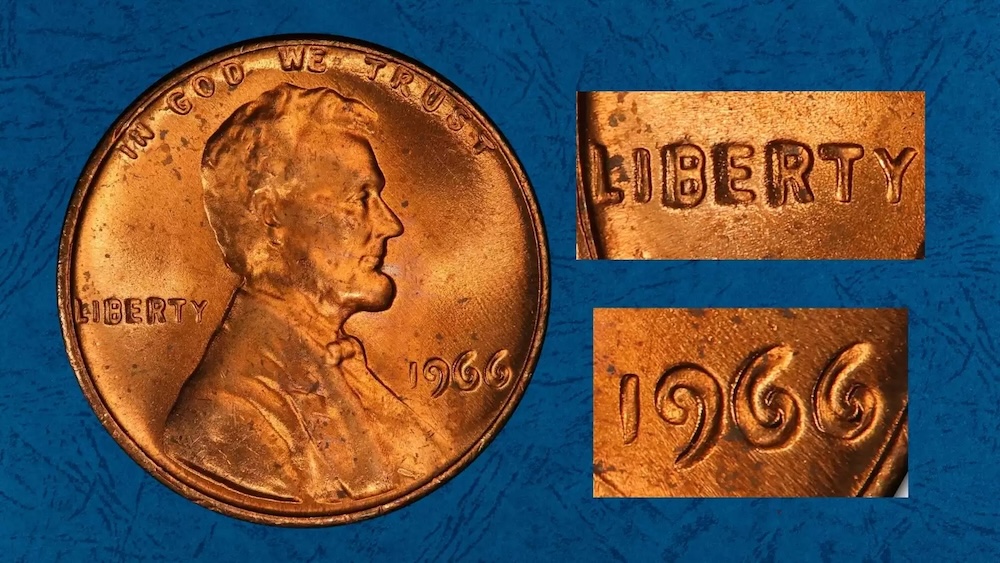
This is the single most common mistake new collectors make. A Doubled Die Obverse (DDO) is a die manufacturing error: the hub impressed the die twice at slightly different angles, so every coin struck from that die carries a permanent secondary image. The secondary image is raised and rounded, with clear separation from the primary design. Machine doubling (also called strike doubling or shelf doubling) is a completely different thing — it happens during the striking process when the die bounces or shifts, creating a flat, shelf-like distortion. Machine doubling is extremely common and worth nothing extra. Before you get excited about any "doubled" lettering, look at it under 10x magnification. If the secondary image looks three-dimensional and matches the depth of the primary design, it may be a real DDO. If it looks flat and smeared, it's machine doubling. Move on.
The Close AM Varieties — Still Found in Circulation
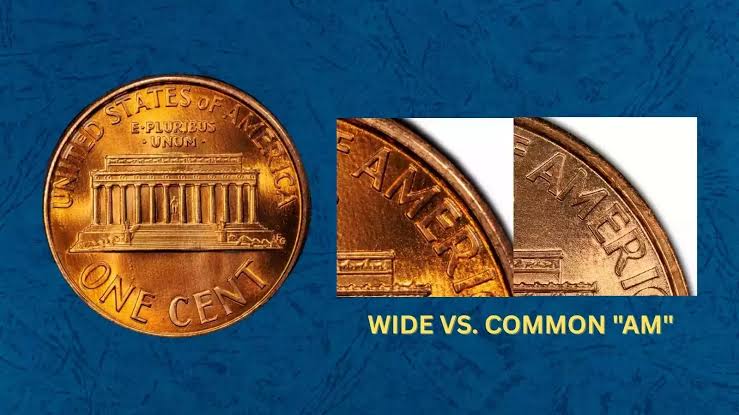
In the 1990s, the US Mint used two different reverse dies for Lincoln cents: Wide AM (the letters A and M in AMERICA are clearly separated) for business strikes, and Close AM (A and M nearly touch) for proofs. When the dies got swapped by accident, business strikes came out with the proof reverse or vice versa. The 1992 Close AM, 1998 Close AM, and 1999 Wide AM are the valuable ones. A 1992 Close AM in MS-67 RD sold for $25,850. These are among the few coins on the list that genuinely still appear in pocket change, because billions of 1990s pennies remain in circulation and almost no one checks the AM spacing.
The Wartime Wheat Cents — 1943 Bronze and 1944 Steel
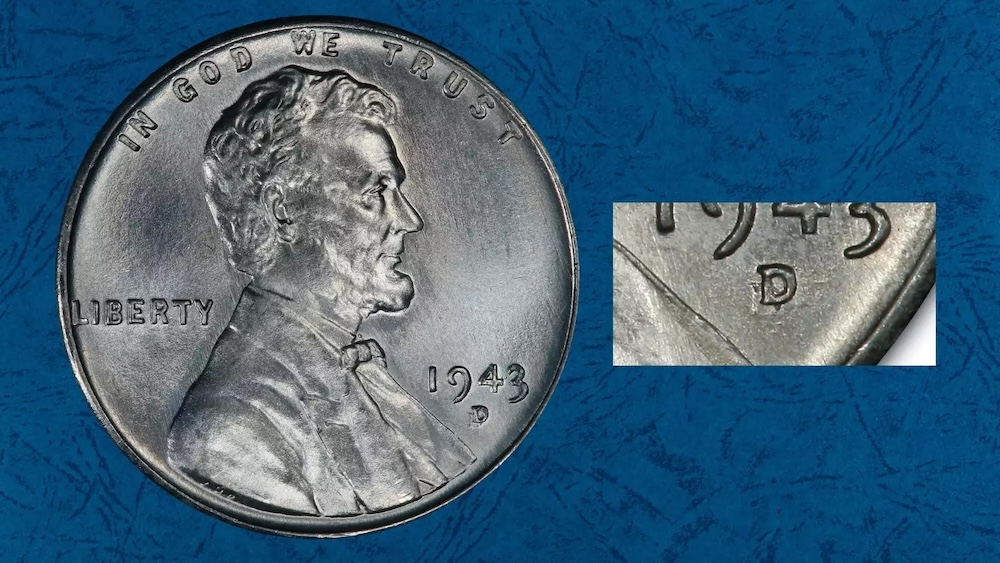
The most famous wrong-planchet errors in US coinage. In 1943, the Mint switched from bronze to zinc-coated steel planchets to save copper for the war effort. A few leftover bronze blanks got jammed in the tote bins and were struck as 1943 pennies — roughly 20 known from Philadelphia, 5 from San Francisco, and a single unique example from Denver. The Denver specimen sold for $840,000. The reverse mistake happened in 1944 when the Mint switched back to bronze but a handful of leftover steel blanks made it into production — the 1944 steel cents are actually rarer than the 1943 bronze cents. Authentication is straightforward and every 1943 or 1944 penny should be tested: a genuine 1943 bronze does not stick to a magnet and weighs 3.11g; a real 1944 steel does stick and weighs 2.70g. Copper-plated fakes of 1943 steel cents are common — the magnet test catches all of them.
Why Color Grade Matters More Than You Think
Copper coins oxidize over time, moving from bright red (RD) to red-brown (RB) to full brown (BN). Grading services assign a color designation alongside the numerical grade, and the price impact is dramatic. An MS-67 RD can be worth 5–10 times more than the same coin graded MS-67 BN. Almost every coin on the Top 100 carries an RD designation for that reason. This means color preservation matters as much as the date and variety — a common-date penny in MS-68 RD can outrank a famous error in a lower grade. Never store copper coins in PVC flips, never expose them to moisture, and never wipe them.
How to Grade Your Lincoln Penny
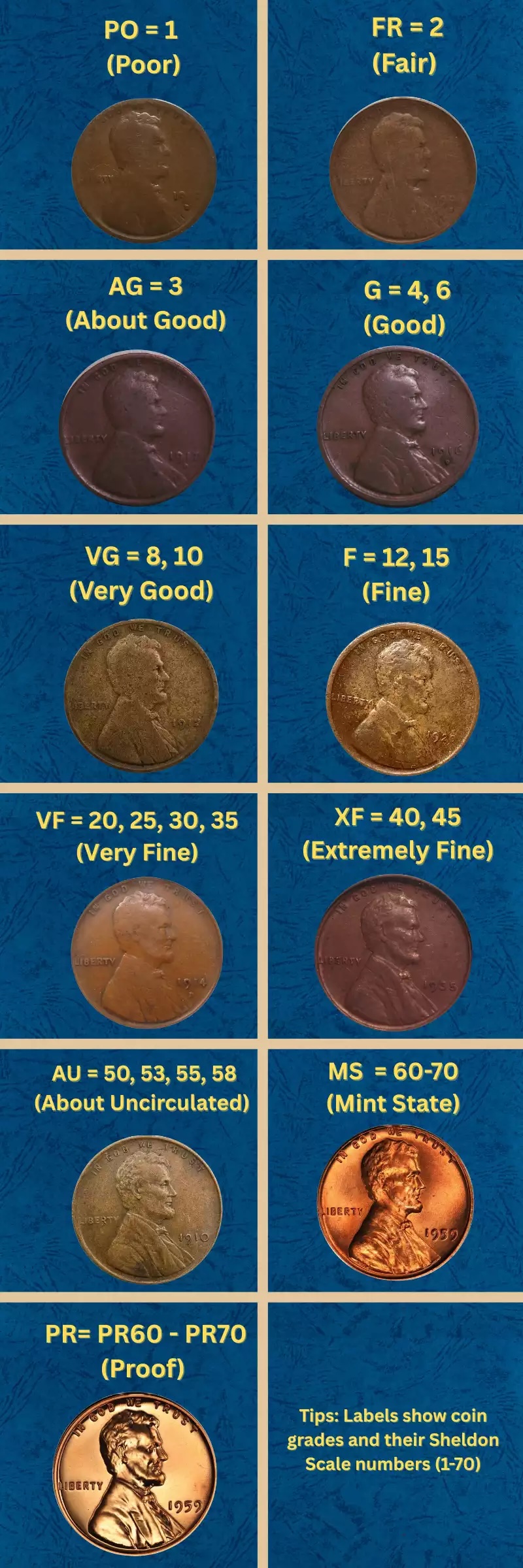
Professional services like PCGS and NGC use the Sheldon scale (1–70). Here is what the key grade tiers look like for Lincoln cents on the Top 100 list.
MS-64 to MS-65
Light contact marks visible under magnification. Good luster and eye appeal. Some original red may remain.
MS-66 to MS-67
Very few contact marks. Sharp strike with strong luster. Most Top 100 coins fall in this range.
MS-68 to MS-69
Nearly perfect. Virtually no contact marks under 5x magnification. Exceptional eye appeal and full original color.
PR/PF-69 to PF-70
Perfect or near-perfect proof coin. Mirror fields, frosted devices. Deep Cameo (DCAM) adds major premium.
Common Mistakes That Destroy Value
❌ Confusing Machine Doubling with DDO
Machine doubling is flat and shelf-like — it has zero premium. Genuine DDO shows raised, rounded secondary images with clear separation. Always verify under magnification before assuming you have a doubled die.
❌ Cleaning or Polishing Coins
Any cleaning — even a gentle wipe with a cloth — creates microscopic scratches that graders detect immediately. A cleaned coin loses 30–80% of its value and receives a permanent "Cleaned" notation on the slab.
❌ Selling Without Certification
Raw (ungraded) coins sell for significantly less than certified examples. If you believe your coin is worth over $100, the $20–$40 PCGS or NGC grading fee is a worthwhile investment that typically increases the realized sale price by 30–80%.
❌ Handling Coins Improperly
Fingerprints contain oils and acids that etch copper surfaces permanently. Always hold coins by the edge, use cotton gloves for valuable specimens, and store in non-PVC flips or holders.
Frequently Asked Questions
What are the most valuable US pennies?
How can I tell if my penny has a doubled die error?
Which valuable pennies can still be found in pocket change?
What is the difference between DDO and machine doubling?
How much does professional coin grading cost?
What do the color grades RD, RB, and BN mean?
About This Guide
This list is compiled and maintained by John Saechao, a California-based coin collector whose portfolio spans multiple eras and continents. John has a long-standing passion for numismatics and shares his research on grading, error varieties, and market prices with the coin-collecting community, where he's recognized for the depth and breadth of his knowledge-sharing.
Every price on this list is a verified auction result — not a guide-book estimate or a "what people hope it's worth" number. Sources include Heritage Auctions, Stack's Bowers, GreatCollections, David Lawrence Rare Coins, Bowers & Merena, and public records from the PCGS and NGC certification databases (2015–2025). Where multiple sales exist for the same variety and grade, the highest verified sale is used.