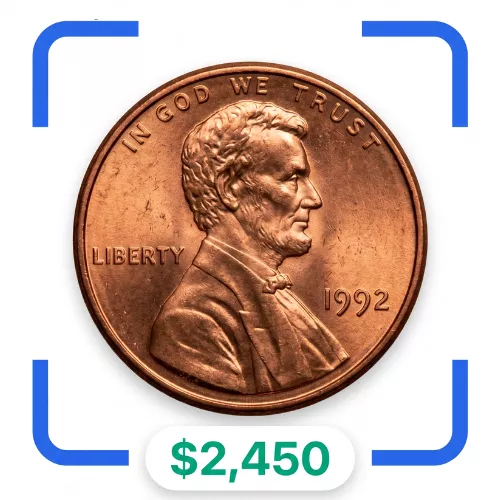


The Lincoln cent first appeared in 1909 to honor the hundredth anniversary of Abraham Lincoln's birth.
Victor David Brenner designed the new penny to replace the older Indian Head design.
He placed his initials, V.D.B., prominently at the bottom of the reverse side.
The public quickly complained that the letters were too large and looked like self-promotion.
Officials at the United States Mint halted production after just a few weeks to remove the designer initials.
The main facility in Philadelphia had already struck millions of coins before the change.
The branch mint in San Francisco had barely started running the dies.
Workers in San Francisco struck only 484,000 pennies with the designer initials before stopping.
This early shutdown created the most famous regular-issue penny in American history.
In 2022, Stack's Bowers offered a stunning example of this famous date.
Bidders competed aggressively until the final price reached an astounding $168,000.
Professional coin graders certified the piece as MS-67 Red.
The MS-67 designation stands for Mint State 67 on the standard 70-point grading scale.
This means the coin shows zero wear from circulation and has virtually flawless surfaces.
The Red label confirms the copper retains full original mint luster without toning brown.
Record prices like this happen only for coins preserved in the absolute highest state of preservation.
Most surviving examples do not come close to this grade level.
Low production numbers sit at the center of the value for this San Francisco issue.
The mintage of 484,000 pieces remains one of the smallest totals in the entire cent series.
The public recognized the rarity almost immediately when the mint removed the initials.
People across the country started saving every copy they could find in 1909.
This early hoarding helped thousands of examples survive over the decades.
However, pure copper reacts quickly to air, moisture, and handling.
Most hoarded coins slowly darkened from bright copper to a mellow brown tone over time.
Finding an original coin that kept its bright red factory color for over a century is exceptionally tough.
Every serious collector building a complete set of Lincoln cents needs this exact date.
The combination of constant collector demand and true condition rarity pushes top-tier prices skyward.
Grab a magnifying glass or a 10x jeweler loupe to check the important markers on the coin.
First, look at the front of the penny directly under the 1909 date.
You must see a clear "S" mint mark stamped beneath the numbers.
Next, flip the coin over and look at the bottom rim between the tips of the two wheat stalks.
You should see the raised letters "V.D.B." spaced cleanly along the lower border.
If the initials are missing, you have the common Philadelphia version without initials from later in the year.
If you need a quick first pass on a raw coin, the CoinKnow app can help you verify key details from a clear photo.
Even heavily worn genuine pieces easily bring between $600 and $700 on the market.
Because of this high floor price, dishonest sellers frequently fake this specific coin.
Counterfeiters often glue a fake "S" onto a common Philadelphia coin or carve fake initials onto a plain 1909-S.
Always submit an uncertified example to a major third-party grading service for authentication before buying or selling.
The quickest route to a rough price is a scanning app — see which free coin identifier apps is worth installing.
Upload a photo and get an instant value, grade estimate, and error check — no jargon, no sign-up required.