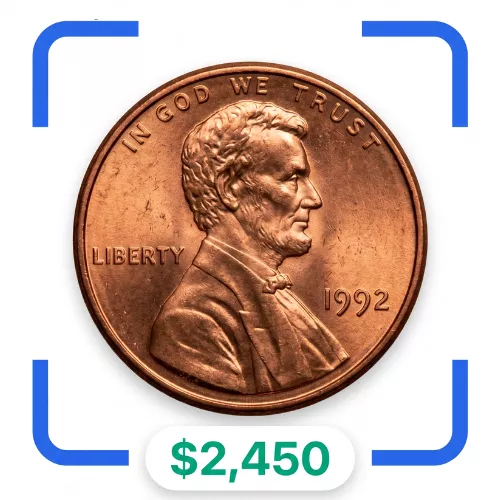


The 1910-S Lincoln cent comes from the second year of the famous Wheat penny series.
The San Francisco Mint struck these copper coins just one year after Victor David Brenner redesigned the American cent.
In those early years, the San Francisco facility produced far fewer pennies than the main mint in Philadelphia.
Most of these cents quickly entered daily circulation across the western United States.
People spent them on newspapers, transit fares, and everyday goods.
Because they saw heavy use, very few pieces survived without scratches, dents, or heavy wear.
Finding an early S-mint penny that still looks the way it did when it left the dies is quite difficult.
Copper also reacts quickly to air and moisture, making original bright pieces even harder to locate.
A top-grade example of this coin brought a massive price of $48,000.
Heritage Auctions handled the sale of this rare penny.
The coin was certified in MS Red condition by a major grading service.
The "MS" stands for Mint State, meaning the coin never circulated in daily commerce.
The "Red" or "RD" designation means the copper retains nearly all of its original mint luster and fiery orange color.
A grade like this places a coin in the absolute upper tier of quality for the entire issue.
Prices at this level happen because top collectors compete fiercely for registry set coins.
Most surviving 1910-S cents will not bring this price because they show wear or have turned brown.
Early S-mint Lincoln cents carry natural collector demand because of their low production numbers.
Condition rarity is the main factor that pushes this specific coin into five-figure territory.
Copper is an active metal that oxidizes naturally over time.
As copper ages, it turns from bright red to brown, passing through a red-brown stage first.
Bag friction and finger oils from handling also ruin the delicate surfaces of uncirculated coins.
Very few collectors in 1910 saved whole rolls of S-mint cents in airtight containers.
That means the survival rate for full-red Mint State examples is tiny compared to worn specimens.
When a pristine red survivor appears at auction, advanced collectors are willing to pay a large premium.
Start by checking the date on the front of the coin below Lincoln's bust.
You need to see the year 1910 clearly struck on the right side of the portrait.
Next, look directly below the date for the small "S" mint mark.
Use a 5x or 10x jeweler's loupe under good light to inspect the letter closely.
If there is no letter below the date, the coin was struck in Philadelphia and is much more common.
Make sure the mint mark is genuine and part of the coin rather than an altered or glued-on letter.
Look at the overall color of the surfaces across both sides of the coin.
A true Red coin will show bright, fiery copper with full luster and no dark tarnish.
If you have trouble reading the details, you can use CoinKnow or Coin Value Checker to get a quick read on the date and mint mark.
Check the wheat stalks on the reverse side for high-point wear on the grain tips.
Any flatness on Lincoln's cheek or the wheat ears means the coin spent time in circulation.
Keep your coin in a protective holder so you do not add new fingerprints to the metal.
For a simple price check on your phone, see the free coin identifier apps picks that held up in testing.
Upload a photo and get an instant value, grade estimate, and error check — no jargon, no sign-up required.