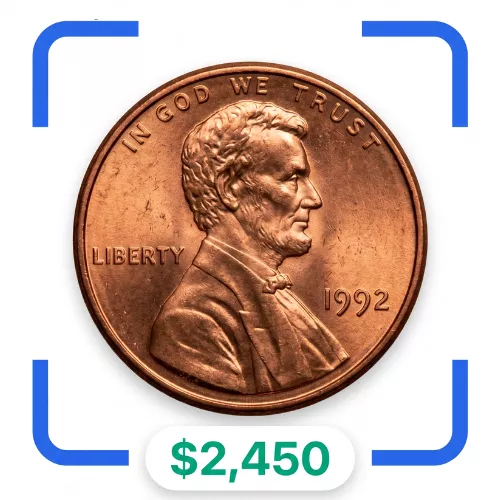


The 1911-D Lincoln cent holds a special place in American coinage history.
The Denver Mint started striking Lincoln cents in 1911, making this the very first year the facility produced them.
Before this issue, the United States Mint only produced pennies in Philadelphia and San Francisco.
Collectors pay close attention to this date because early branch mint cents are notoriously difficult to find in pristine condition.
Most of these bronze coins entered active circulation right away.
People spent them on daily goods, and the coins quickly gathered wear and dirt.
Finding an original piece that kept its mint luster from over a century ago is extremely tough.
It represents the start of a long tradition of Denver cent production.
A premier example of this early Denver cent sold for an eye-catching $66,000.
Heritage Auctions handled the sale of this standout piece.
The coin was certified in Mint State Red condition by professional graders.
Mint State means the penny never circulated in daily commerce.
It has no rub or wear on Lincoln's cheek, hair, or coat.
The Red designation means the copper retained nearly all of its original bright, fiery color from the day the dies struck the planchet.
Copper naturally turns brown as it reacts with oxygen and moisture over time.
Certified coins with this level of original color are the ones that break sales records.
Keep in mind that typical pocket change finds will not sell for figures like this.
Only top-tier certified specimens bring this kind of money on the auction block.
The primary driver behind this coin's high price tag is condition rarity.
Early Denver issues often suffered from weak strikes and poor metal quality.
Finding a 1911-D with sharp details across the entire design is already a challenge.
Finding one that also survived in remarkable full-red condition is far harder.
Most surviving 1911-D pennies are either well-worn or toned to a deep chocolate brown.
Collectors who build high-grade registry sets compete aggressively for fully red survivors.
When two or more wealthy collectors want the finest known example for their sets, bids climb rapidly.
The historical importance of being the first Denver Lincoln cent adds even more collector demand.
All of these factors combine to push prices into record territory when the best examples cross the block.
You can check your coin at home using a standard magnifying glass or a jeweler's loupe.
First, look at the front of the coin directly below the date 1911.
You need to see a small "D" mint mark beneath the numbers.
If there is no letter below the date, the Philadelphia Mint made your coin.
If you see an "S", the San Francisco Mint struck it.
Next, examine the surface color under a good desk lamp.
A full red coin looks bright orange-red, just like a freshly minted cent.
Brown or dark spots will downgrade the color status to Red-Brown or Brown.
If you are not sure what you have, you can use CoinKnow or Coin Value Checker on your phone to get a helpful first read on the date and mint mark.
Watch out for altered coins where someone added a fake "D" mint mark to a common Philadelphia penny.
A close look under 10x magnification will show if the mint mark looks natural or glued on.
If the coin looks genuine and fully red, consider sending it to a reputable third-party grading service for authentication.
If you want to double-check what you are seeing, the free coin identifier apps picks that held up in testing helps.
Upload a photo and get an instant value, grade estimate, and error check — no jargon, no sign-up required.