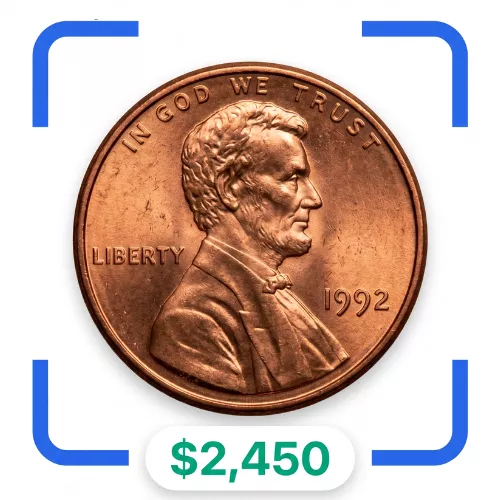


The Philadelphia Mint struck this copper penny in 1911 as part of the early Lincoln Cent series.
Victor David Brenner designed this iconic portrait of Abraham Lincoln just two years earlier in 1909.
Philadelphia made millions of these cents for everyday commerce back then.
People spent them quickly on newspapers, candy, and streetcar rides.
Most of those coins wore down or turned dark brown over the decades.
Finding an early Philadelphia cent that still keeps its bright, original copper glow is quite rare today.
This specific coin stands out because it kept that fiery copper color without tarnishing over more than a century.
Heritage Auctions sold a top-tier example of this cent for a massive $21,850.
The coin achieved a certified grade of Mint State Red from professional graders.
Mint State means the penny never saw actual spending use and shows no trace of wear on its high points.
The Red designation means the surfaces still show at least ninety-five percent of their original fiery mint color.
Serious collectors compete hard whenever a piece with this level of pristine color appears on the block.
Bidders pushed the final hammer price into five figures because so few survived in this exact condition.
Keep in mind that typical worn pennies from 1911 will not sell for this kind of money.
Only certified, perfectly preserved pieces achieve these record-breaking figures.
Raw mintage numbers do not tell the whole story for early Lincoln cents.
Philadelphia produced a large supply, so finding a worn 1911 penny is not difficult for collectors.
The true value comes down entirely to condition rarity.
Copper reacts easily with moisture, air, and paper envelopes over time.
Most 1911 cents naturally darkened into brown or red-brown shades as the decades passed.
Full red examples from the early 1910s are tough to find because few collectors stored them safely back then.
Lincoln cent enthusiasts want the highest quality for their registry sets.
This strong collector demand combined with a tiny supply of spotless red coins drives the market price way up.
You can start checking your coin by looking closely at the date on the front right side.
Confirm the date reads clearly as 1911.
Look directly underneath the date for a mint mark.
Philadelphia issues show no letter below the numbers, meaning the space should be completely smooth.
Use a good magnifying glass with at least 5x power to inspect the surfaces.
Hold the coin under a bright, natural light source to examine the color.
Check if the penny shows an authentic orange-red luster or if it has turned dark brown.
Look out for old cleaning attempts, which can give copper an unnatural pink or hazy look.
Check Lincoln's cheek, jaw, and the wheat stalks on the back for any signs of friction or flatness.
If you are not sure what you have, a mobile tool like Coin Value Checker can help you do a fast first pass.
An app like CoinKnow makes it easy to scan details before you decide to seek a professional grading opinion.
Remember that a genuine record-grade cent must have clean surfaces free of heavy spots, scratches, or wear.
Not sure where your coin lands on the chart? our roundup of the best free coin identifier apps options sorts it out from a photo.
Upload a photo and get an instant value, grade estimate, and error check — no jargon, no sign-up required.