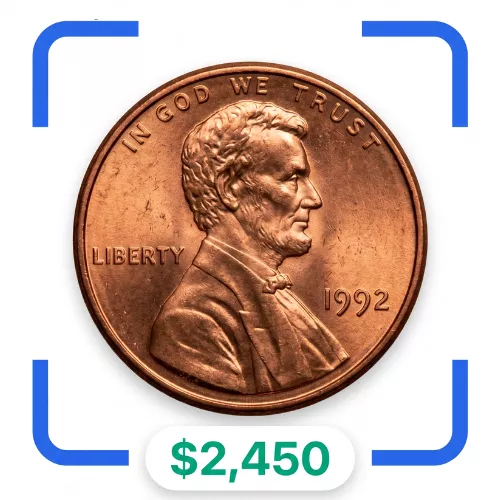


The United States Mint struck this Lincoln penny in 1911 at the San Francisco branch.
Collectors refer to it as an early S-mint Wheat cent.
San Francisco produced far fewer pennies than the main mint in Philadelphia during this era.
Because of that lower output, early branch-mint Lincoln cents immediately caught the attention of serious collectors.
This specific coin stands out because it preserved its original copper color over more than a century.
Most copper coins from this period turned brown or spotted after decades in circulation.
Finding a genuine 1911-S in bright condition is exceptionally tough.
Heritage Auctions handled the sale of this standout cent.
The coin brought an impressive winning bid of $27,600.
Professional coin graders certified the piece in Mint State Red condition.
Mint State means the coin never circulated in daily commerce and shows no trace of wear on its highest design points.
The Red designation means the copper retained nearly all of its original bright mint luster.
You should keep in mind that auction records like this apply only to top-tier certified specimens.
An average circulated penny from the same year will trade for much less money.
The primary driver behind this coin's value is condition rarity.
Early S-mint pennies were spent freely when they entered circulation in 1911.
Very few people put fresh uncirculated rolls away in safe storage back then.
Copper reacts quickly with moisture, sulfur, and air over time.
Because copper is so chemically active, most surviving 1911-S cents faded from red to red-brown or solid brown.
Demand for early Lincoln cents remains high among set builders who want every date in top quality.
When an early S-mint Wheat cent in full-red condition appears at auction, competition gets fierce.
The combination of an early date, a San Francisco mint mark, and pristine color makes this coin a true prize.
You can begin checking your coin by looking closely at the date on the front side.
Find the year 1911 placed to the right of Abraham Lincoln's portrait.
Look directly below the four digits of the date to check for the mint mark.
You need to see a small "S" stamped neatly underneath the date numbers.
If there is no letter below the date, the Philadelphia Mint made the coin, which is far more common.
Use a 5x or 10x jeweler's loupe under good light to inspect the surface quality and color.
You want to check whether the surfaces show the original bright red luster rather than dark brown toning.
Make sure the S mint mark looks original and has not been glued or altered onto a common Philadelphia cent.
If you are not sure what you have, the Coin Value Checker app can give you a quick first look from your phone.
A simple photo scan helps you verify key date details before you decide on third-party certification.
Always handle your penny by the edges so the oils from your fingers do not damage the delicate copper surfaces.
For a quicker path than reading every row, see a closer look at which free coin identifier apps actually works.
Upload a photo and get an instant value, grade estimate, and error check — no jargon, no sign-up required.