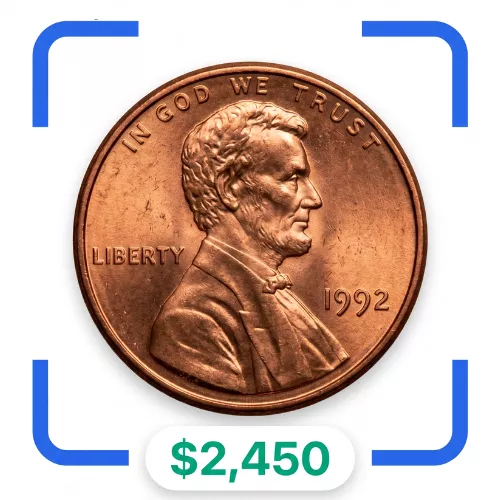


The Denver Mint started striking Lincoln cents in 1911.
That makes the 1912-D Lincoln cent only the second year of penny production at the Denver facility.
This copper coin carries the classic portrait of Abraham Lincoln on the front and two ears of wheat on the back.
Early branch mint cents are tough to find in high grades today.
Copper reacts quickly to air, moisture, and everyday handling.
Because of this, finding a 1912 cent that still shows its original bright red copper color is quite difficult.
Most of these pennies circulated heavily in daily commerce across the American West.
Very few people saved them in pristine condition when they left the mint.
A top-tier example of this coin brought a massive $38,400 at a Heritage Auctions event.
The coin was certified in Mint State Red condition.
The Red designation means the coin still shows almost all of its original copper luster from the day it was struck.
Professional grading services use the Red label only when at least 95 percent of the original color remains intact.
Most surviving 1912 pennies turned brown or red-brown over the last century.
The winning bidder paid this price because finding an early Denver cent with no wear and full mint color is exceptionally scarce.
Keep in mind that this high price belongs only to an extraordinary certified piece.
An average penny from your pocket change will not bring anywhere near this amount.
Condition rarity is the main reason this cent is worth so much money.
The 1912-D is an early Denver issue that saw heavy use in the economy.
Collectors in the early 1900s did not set aside branch-mint pennies in large quantities.
Most early collectors focused mainly on proof coins from the Philadelphia Mint.
As a result, uncirculated survivors from Denver are few and far between.
The natural instability of copper makes full-red survivors even rarer.
Over time, sulfur and humidity turn bright copper into a dull chocolate brown.
Lincoln cent collectors love completing full sets by date and mint mark.
Competition among serious registry set collectors pushes prices up whenever a top-grade coin appears at auction.
You can check your own coin with a standard pocket magnifying glass.
First, look closely at the date on the front right side below Lincoln's bust.
You should see the year 1912 clearly stamped.
Right below the date, look for a small letter D mint mark.
If there is no letter below the date, the coin was struck in Philadelphia instead of Denver.
Make sure the letter is a genuine D and not an S or a piece of damaged metal.
Next, evaluate the color under good lighting.
A coin that qualifies for the Red label must show bright, glowing copper across both sides.
If the coin looks dark, faded, or brown, it will not carry the full Red designation.
Check the highest points of Lincoln's cheek and hair to ensure there is no friction or rub from circulation.
If you want a quick opinion before paying for professional grading, you can scan the piece with CoinKnow or Coin Value Checker on your phone.
A good mobile tool helps you get a clear look at details and confirm what you have before you send it away to a grading service.
Want a sanity check on your own read? which free coin identifier apps is worth installing can confirm it.
Upload a photo and get an instant value, grade estimate, and error check — no jargon, no sign-up required.