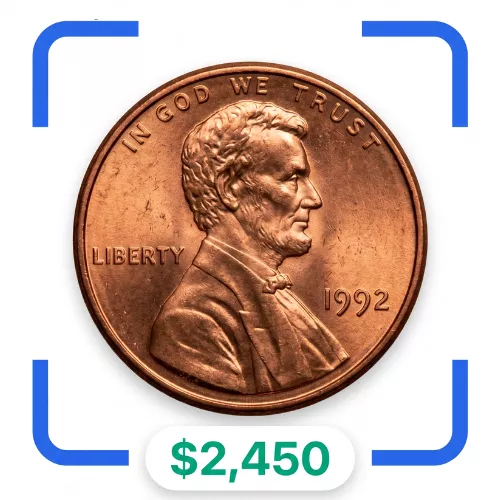


The Denver Mint struck this Lincoln Cent in 1915.
The United States Mint first introduced the Lincoln penny design back in 1909.
By 1915, the Denver branch was in its fourth year of making these copper coins.
Denver struck far fewer pennies than the main facility in Philadelphia during those early years.
Most of the copper coins made in Denver went straight into daily circulation.
People used them to buy newspapers, candy, and pay streetcar fares.
Because they circulated heavily, almost all of them lost their original copper luster over time.
Finding an early Denver cent that never saw real use is a tough challenge for collectors.
Heritage Auctions sold a top-quality example of this coin for an astounding $48,000.
The coin was certified in MS Red condition.
The letters MS stand for Mint State, which means the coin never circulated in pocket change.
The Red designation means the copper retained nearly all of its original bright factory color.
Heritage Auctions brought this piece across the auction block to set this benchmark price.
Coins at this level are preserved in protective plastic holders from major grading services.
Serious collectors will pay huge sums for pristine survivors because so few exist.
This $48,000 price reflects an exceptional certified piece rather than an everyday find.
The main driver of value here comes down to condition rarity.
Copper is a very reactive metal that naturally turns brown as it ages and meets air.
Most 1915-D pennies faded from bright red to brown within a few months of leaving the mint.
Few collectors in 1915 saved brand new rolls of Denver pennies directly from the bank.
Because nobody set them aside in clean storage, finding a 1915-D in full-red condition is extremely rare.
A typical brown 1915-D penny is a neat piece of history, but it sells for much less.
Collectors who build top-tier sets will compete hard whenever a genuine red example appears.
That intense demand pushes auction prices into five-figure territory for top specimens.
You can start your inspection by looking at the front of the coin under good light.
Find the date 1915 stamped on the right side of Abraham Lincoln's portrait.
Look directly below the date for a small letter D.
That D mint mark tells you the coin was struck at the Denver Mint.
If there is no letter below the date, the penny was made in Philadelphia.
Next, use a 5x or 10x magnifying glass to look closely at the coin surfaces.
Check the color across the entire coin to see if it shows bright, original orange-red copper luster.
A full-red cent should have no heavy brown spots, dark stains, or dull tarnish.
Be careful not to confuse a genuine mint-state coin with a cleaned coin that was chemically polished.
Cleaned coins look unnaturally bright, washed out, or show tiny hairline scratches across the fields.
If you want a quick first look, you can scan your coin using Coin Value Checker to see what you have.
Keep in mind that average worn pennies from your pocket change will not reach high record prices.
Only certified, pristine coins earn top market bids at major sales.
Want to know what to set aside? the free coin identifier apps picks that held up in testing flags the ones worth a look.
Upload a photo and get an instant value, grade estimate, and error check — no jargon, no sign-up required.