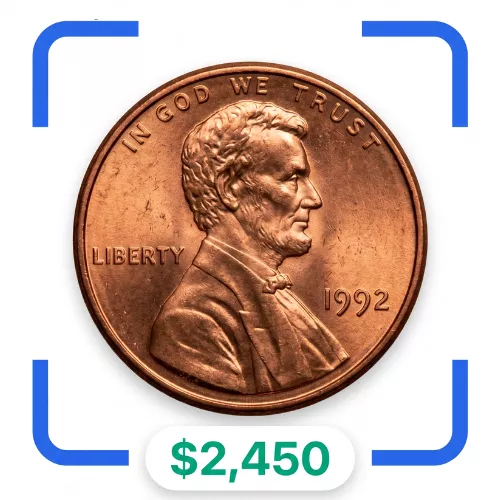


The United States Mint struck this Lincoln Cent in 1915 at the main facility in Philadelphia.
Like other early cents from this era, it was made out of a bronze alloy with a high copper content.
Coins struck in Philadelphia during this period did not feature a mint mark below the date.
By 1915, the Lincoln design by Victor David Brenner had been in daily circulation for six years.
Millions of these pennies went straight into pockets, cash registers, and piggy banks across the country.
Most of them wore down quickly through years of heavy everyday commerce.
Finding an early Philadelphia cent that completely escaped that heavy use is remarkably difficult.
An exceptional example of this penny reached a price of $38,400 at Heritage Auctions.
The coin was certified in pristine MS Red condition by professional graders.
The MS stands for Mint State, which means the coin never circulated and shows zero trace of wear.
The Red designation means the copper retained nearly all of its original, fiery mint luster from the day it was struck.
Copper naturally tones to brown or red-brown over time when exposed to air and moisture.
Keeping full, original red color after more than a century requires perfect storage conditions.
Serious collectors pay immense premiums when a coin combines flawless surfaces with full original red color.
A typical circulated 1915 penny is relatively easy to find and affordable for most collectors.
The extreme value comes down entirely to condition rarity and color designation.
Copper is a chemically active metal that reacts easily with oxygen, sulfur, and human skin oils.
Over a hundred years, almost every 1915 cent turned dark brown or developed heavy contact marks.
Only a tiny fraction of the original mintage survived in full-red condition.
Lincoln Cent enthusiasts compete aggressively to build the highest-graded sets possible.
When an untouched survivor with radiant original surfaces appears at auction, multiple advanced bidders fight for it.
That intense collector demand at the top of the grading scale drives prices into five figures.
Start by looking at the date on the right side of Lincoln's bust on the obverse.
Check the space directly below the 1915 date to confirm there is no mint mark.
If you see an S or a D, you have a penny from San Francisco or Denver instead of Philadelphia.
Next, use a good magnifying glass to examine the color and surface quality of the coin.
Look for bright, glowing orange-red copper across both the front and the back.
Check the high points on Lincoln's cheek and jaw for any signs of dullness or rubbing.
Do not confuse a genuinely preserved mint-state coin with a cleaned or polished piece.
Cleaned coins often have an unnatural, washed-out pink hue and fine hairline scratches all over the fields.
If you want a quick first pass on a coin in your collection, you can scan it with CoinKnow or Coin Value Checker to get basic details.
Keep in mind that typical pocket change finds will almost always be worn brown examples worth far less than high-grade registry pieces.
A true five-figure price requires third-party certification showing an uncirculated grade and full red color.
Want a value without learning grading terms first? See our roundup of the best free coin identifier apps options.
Upload a photo and get an instant value, grade estimate, and error check — no jargon, no sign-up required.