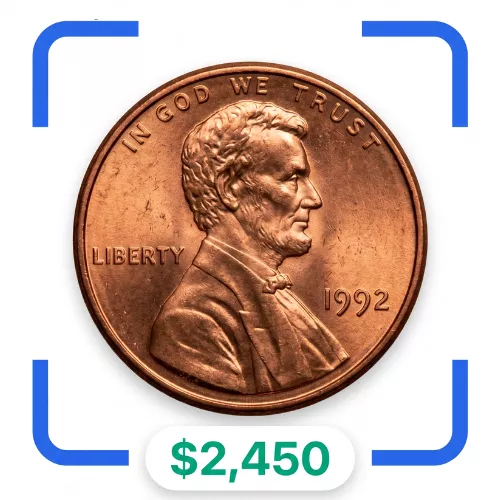


The 1916 Lincoln cent came from the main United States Mint facility in Philadelphia.
It is made of bronze, which was the standard metal alloy for cents at that time.
World War I was underway in Europe during 1916, which boosted domestic commerce in America.
Because trade was active, millions of these pennies went straight into circulation.
People used them every day to buy newspapers, candy, and streetcar rides.
Finding a 1916 penny today is not hard, but finding an unused one is very difficult.
This date stands out because very few people thought to save fresh coins from the mint back then.
A top-tier example of this penny reached a stunning $36,000 at Heritage Auctions.
The coin was certified in Mint State Red condition by professional graders.
Mint State means the penny never circulated and shows zero trace of wear on its details.
The Red designation means it kept its original bright copper color from the day it was made.
Copper naturally tarnishes into brown over time, so original red color is scarce on early pennies.
Bidders competed hard because a certified piece in this condition appears on the market very rarely.
High auction records like this happen when advanced collectors fight for registry-quality coins.
The main driver of value for this specific coin is pure condition rarity.
The Philadelphia Mint struck plenty of pennies in 1916, so the date itself is not rare.
Most surviving pieces are heavily worn, scratched, or turned dark chocolate brown.
A 1916 Philadelphia cent in full-red condition is an extreme exception to the rule.
Copper reacts quickly to moisture, air, and the oils from human fingers.
To stay bright red for over a century, a coin had to sit in ideal storage conditions.
Strong collector demand for pristine Lincoln cents pushes these top-grade prices upward.
Your average pocket-change find will not bring this price, as worn examples are worth very little.
Look at the front of the coin to check the date first.
You should see the year 1916 clearly stamped to the right of Abraham Lincoln's chest.
Look closely right below the date for a mint mark.
A Philadelphia coin has no mint mark at all in that space.
If you see a small letter D or S, your coin was struck in Denver or San Francisco instead.
Use a 5x or 10x magnifying glass to inspect the surfaces of the coin under good light.
Check the highest points of the design, including Lincoln's cheekbone and the wheat stalks on the back.
If those high spots show any dullness or flatness, the coin has seen circulation wear.
Next, evaluate the color across both sides of the penny.
A true Red coin must show at least ninety-five percent of its original bright orange-red mint glow.
Be careful not to confuse a genuine mint-state coin with a cleaned coin.
Cleaned pennies look unnaturally bright, pinkish, or show fine hairline scratches from harsh rubbing.
Cleaning a coin ruins its collector value immediately, so never try to polish an old penny.
If you are not sure what kind of surface you are looking at, an app like CoinKnow can help you make a quick first pass.
Always consult a certified grading service before assuming you have a high-value copper rarity.
Want a simple answer to a simple question? which free coin identifier apps is worth installing gives one.
Upload a photo and get an instant value, grade estimate, and error check — no jargon, no sign-up required.