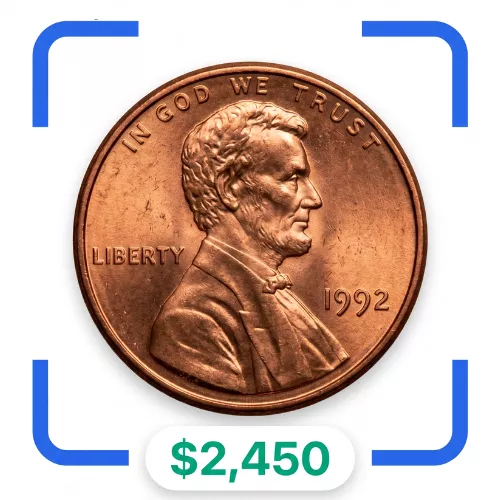


The San Francisco Mint struck this copper penny in 1916.
It belongs to the long-running Lincoln Cent series that first started in 1909.
Early branch mint pennies from San Francisco often saw heavy circulation right away.
People used them every day to buy newspapers, stamps, and groceries.
Because people spent them freely, very few survived without picking up wear and tear.
Finding an early San Francisco penny that retains its original copper color is quite difficult today.
Copper naturally tarnishes and turns brown over time when exposed to air and moisture.
That natural chemical change makes bright, untarnished survivors stand out to collectors.
A top-tier example of this cent sold for $27,600 through Heritage Auctions.
Professional coin graders certified the coin in Mint State Red condition.
Mint State means the penny never circulated in daily commerce.
It shows no friction, rubbing, or wear on the highest points of the design.
The Red designation means the coin kept nearly all of its bright, original mint color.
Grading services only award this designation to copper coins that retain at least 95 percent of their original red luster.
Bidders competed aggressively because finding a 1916 San Francisco penny in this pristine state is exceptionally rare.
Records like this belong strictly to the finest known certified coins.
Condition rarity is the main factor behind the high price of this coin.
While worn 1916-S cents are fairly obtainable, pristine red pieces are not.
Most 1916 pennies from San Francisco turned brown or red-brown over the past century.
Copper is a very reactive metal that oxidizes easily.
A collector had to put this coin away in safe storage almost immediately after it left the mint presses.
Serious Lincoln cent enthusiasts build sets based on strike quality and color.
They want fully original red examples for every single date and mint mark.
Since the supply of high-grade red survivors is tiny, demand easily outpaces availability.
That intense competition among advanced collectors drives the auction prices upward.
You can identify this coin by checking a few specific spots on the front.
Look at the date, 1916, located on the right side below Lincoln's bust.
Check just beneath the date for a small "S" mint mark.
That tiny letter indicates the San Francisco Mint produced the coin.
If there is no letter below the date, the Philadelphia Mint made it instead.
Use a 5x or 10x magnifying loupe under a steady desk light to get a clear view.
Check the surface color to see if it shows full copper red or dull brown.
Be careful not to confuse a genuine original red coin with a cleaned brown penny.
Cleaned coins look unnaturally bright, pink, or harsh, and they lose collector value.
If you want a quick starting point, a mobile tool like Coin Value Checker can help you identify the date and mint mark from a photo.
Keep in mind that typical pocket change finds will be brown and worn.
Only flawless, fully red coins certified by major grading services reach five-figure price levels.
For an immediate ballpark figure, take a look at our roundup of the best free coin identifier apps options.
Upload a photo and get an instant value, grade estimate, and error check — no jargon, no sign-up required.