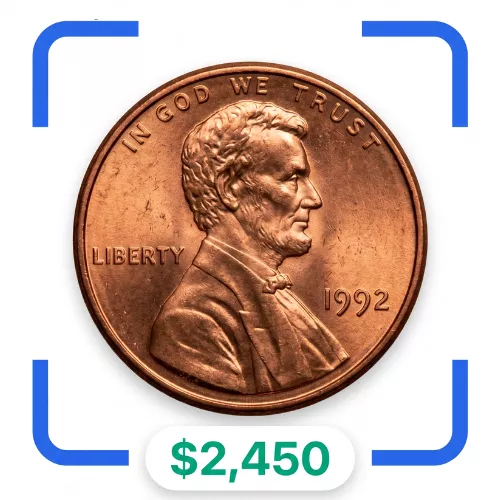


The Denver Mint struck this copper penny in 1917.
It is a classic piece from the long-running Lincoln Cent series.
Coins from branch mints during this era were workhorses for daily trade.
Most of these pennies circulated right away and lost their original luster.
The copper alloy was prone to turning brown over time as it met moisture and air.
Finding a 1917 penny struck in Denver that retains its original copper color is quite unusual.
This entry holds rank 81 on the list of top 200 valuable coins.
A pristine example of this piece sold for $21,275.
The sale took place through Heritage Auctions.
Professional coin graders certified the piece in MS Red condition.
The letters MS stand for Mint State, which means the coin never circulated in pocket change.
The Red designation means the surface keeps nearly all of its bright, original copper glow.
High-grade copper coins are certified inside hard plastic holders to verify their quality and color.
Collectors pay top dollar for such certified pieces because so few have survived in this state.
Prices like this belong to top-end coins and do not reflect common circulated finds.
The main reason behind this price tag is condition rarity.
A standard 1917-D cent in worn condition is fairly common among vintage pennies.
However, a 1917-D in full-red condition is an entirely different matter.
Early branch mint Lincoln cents often suffered from weak strikes and poor storage.
Very few people set aside fresh rolls of Denver pennies back in 1917.
Over the decades, exposed copper naturally oxidizes and turns brown or red-brown.
True full-red survivors are scarce because copper reacts quickly to the environment.
Lincoln cent specialists compete fiercely whenever a certified red piece crosses the block.
You can check your own coin with a few basic steps.
First, use a 5x or 10x magnifying glass to look at the front of the penny.
Find the 1917 date on the right side below Lincoln's chest.
Look directly under the date for the small D mint mark.
If there is no letter below the date, the coin was made in Philadelphia instead of Denver.
Next, examine the surface color under a good desk lamp.
A full-red coin will show a bright orange-copper shine rather than a chocolate-brown tone.
Be careful not to confuse a cleaned coin with an original red surface.
Cleaned coins often show tiny hairline scratches and look unnaturally pink or washed out.
If you are not sure what you have, you can scan the piece with CoinKnow for a quick first pass.
Remember that worn, brown examples are common, while certified full-red pieces remain rare treasures.
Want a value without learning grading terms first? See our breakdown of each free coin identifier apps we tried.
Upload a photo and get an instant value, grade estimate, and error check — no jargon, no sign-up required.