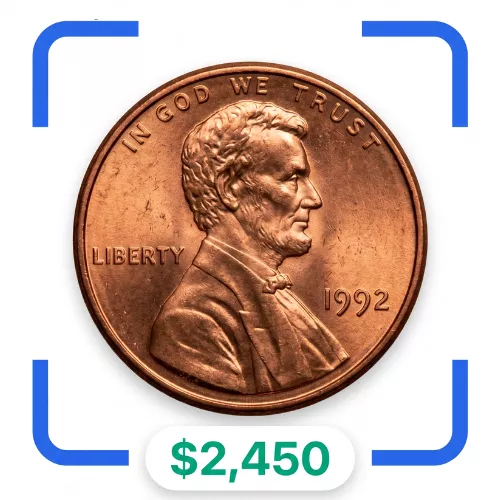


The Philadelphia Mint struck this Lincoln Cent in 1917.
Coins made in Philadelphia that year do not carry a mint mark below the date.
Most 1917 cents look completely normal, but a small batch left the mint with an accidental design shift.
This variety is known as a doubled die obverse, or DDO.
The die itself was impressed twice at slightly different angles during manufacturing.
Every coin stamped by that die received the exact same doubled image.
On top of the rare die error, this particular piece survives in full original red copper color.
Heritage Auctions sold a top-quality example of this coin for $120,000.
The coin was certified in Mint State Red condition.
Mint State means the penny never circulated in daily commerce and shows no wear on Lincoln's cheek or hair.
The Red designation means the copper kept at least ninety-five percent of its original bright factory luster.
Early copper coins easily tone brown or develop spots over decades of exposure to air.
Finding a century-old penny that kept its original fiery color is extremely uncommon.
Serious collectors will pay huge sums when a coin combines a major variety with flawless preservation.
The 1917 DDO predates the famous 1955 doubled die by nearly four decades.
It stands as a classic early-series variety that many advanced Lincoln cent specialists want to own.
The doubling on this piece is bold and unmistakable across key parts of the obverse.
Most early error cents entered circulation and wore down flat before anyone noticed them.
Very few uncirculated examples were put aside when fresh from the dies.
Brown or worn examples still bring decent money, but fully red Mint State specimens sit in an entirely different price class.
High demand from variety collectors combined with near-zero supply at the top grade levels creates massive auction prices.
You should keep in mind that ordinary worn pennies from 1917 will not bring anywhere near this record price.
Start by looking at the date to confirm it reads 1917 with no letter below it.
You will need a magnifying glass with at least 5x power to see the details clearly.
Focus your lens directly on the motto IN GOD WE TRUST along the upper rim.
Look closely at the word TRUST to see strong, separated edges on the letters.
Next, check the word LIBERTY behind Lincoln's shoulder for identical spread.
True die doubling shows raised, rounded letter shapes with clear notch marks on the corners.
Do not confuse this with mechanical doubling, which looks flat, shelf-like, and scraped.
You can scan the front of your coin using Coin Value Checker to get a quick first opinion on what you have.
If the lettering appears distinctly doubled and rounded under your glass, consider having a major grading service inspect it in person.
For quick field checks, take a look at the free coin identifier apps picks that held up in testing.
Upload a photo and get an instant value, grade estimate, and error check — no jargon, no sign-up required.