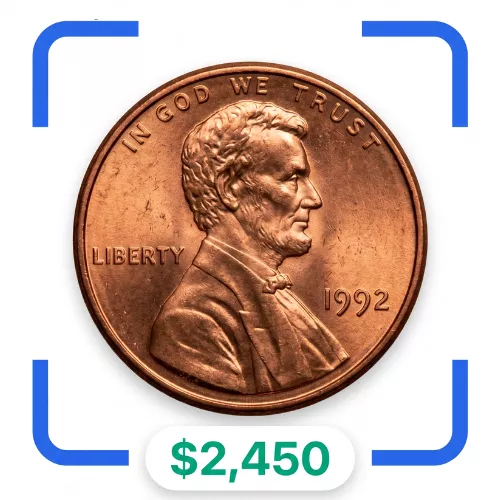


The 1917-S Lincoln cent was struck at the San Francisco Mint during World War I.
It belongs to the classic Lincoln cent series designed by Victor David Brenner.
Like other pennies from that era, the Mint struck it in a standard copper alloy.
San Francisco produced millions of these coins for everyday pocket change.
Most of them spent decades trading hands in daily commerce.
Because of heavy circulation, finding an original 1917-S penny is relatively easy for collectors.
Finding one that kept its original, freshly minted copper color is an entirely different challenge.
Heritage Auctions handled the sale of an exceptional 1917-S penny that reached a price of $36,800.
Professional coin graders certified this record-setting piece as Mint State Red (MS Red).
A Mint State grade means the coin never circulated and shows zero friction or wear on its high points.
The Red designation is the most desirable color category for vintage copper coins.
Grading services award the Red label only when a coin retains at least ninety-five percent of its original bright copper luster.
Coins at this level bring high prices because very few survive without turning brown or developing dark spots over time.
This high auction price reflects an extraordinary specimen rather than an average pocket change find.
Copper is a chemically active metal that reacts easily with oxygen, moisture, and sulfur in the air.
Over the decades, almost all early Lincoln pennies aged into Red-Brown or completely Brown colors.
San Francisco cents from the late 1910s often suffered from softer strikes and lower-quality metal blanks.
These production factors make high-grade surviving pieces even rarer today.
This issue represents a true condition rarity in the Lincoln series.
A typical worn or brown 1917-S penny is affordable for most hobbyists.
A coin that remains fully red after more than a century triggers intense competition among serious collectors.
Dedicated registry set builders require top-grade Red examples to complete their collections, driving demand and prices upward.
You can begin checking your coin by looking closely at the date on the right side of Lincoln's portrait.
Look directly beneath the 1917 date for the small "S" mint mark.
A handheld magnifying glass or a 5x jeweler's loupe will help you clearly see the mint mark.
If there is no letter beneath the date, your coin came from the Philadelphia Mint instead of San Francisco.
Next, check the surface color under a good desk lamp.
A common coin will look dark chocolate brown or dull tan.
A rare, high-value piece shows a vivid, bright orange-red glow across both the front and the back.
You can also snap a photo with an app like CoinKnow or Coin Value Checker to get a quick first opinion on your coin's details.
Be careful not to mistake a cleaned or chemically altered coin for genuine mint luster.
Harsh cleaning strips away the original metal surfaces and ruins the collector value entirely.
If you suspect you have a true uncirculated red coin, consider submitting it to a major third-party grading service for authentication.
If you are unsure about the grade, this comparison of every free coin identifier apps worth trying gives you a starting point.
Upload a photo and get an instant value, grade estimate, and error check — no jargon, no sign-up required.