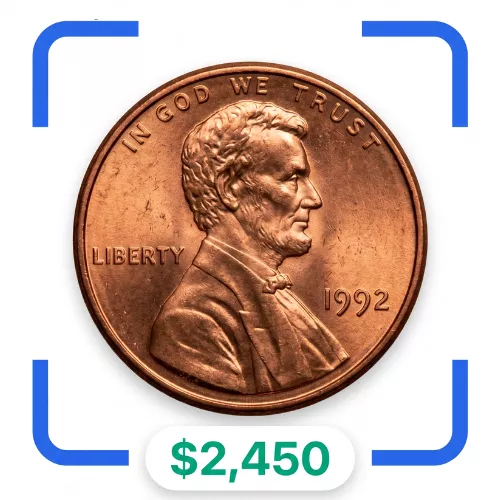


The Denver Mint struck this Lincoln Cent in 1918.
World War I was coming to an end, and commerce moved fast.
Millions of bronze pennies left the mint to meet daily trade needs.
Most of these pennies entered circulation right away.
People spent them on newspapers, candy, and streetcar rides.
As a result, finding an early branch mint cent in pristine shape is very hard.
The 1918-D holds a special place for Lincoln cent collectors.
It represents an early chapter in the long-running series designed by Victor David Brenner.
A top-quality 1918-D cent sold for $45,600 at Heritage Auctions.
The coin achieved a certified grade of Mint State Red.
In numismatics, Mint State means the coin never circulated in pocket change.
It shows no wear on Lincoln's cheek, hair, or coat.
The Red designation means the copper kept its original bright orange luster.
Copper reacts easily with moisture and air over time.
Most old pennies turn brown or develop spots within a few years.
Holding full mint red color after more than a century is a rare feat.
That level of preservation explains why top collectors were willing to bid such a high amount.
Auction records like this belong only to top certified pieces, not everyday pocket change.
The biggest driver of this coin's price is condition rarity.
Denver struck a fair number of pennies in 1918, but few survived untouched.
Coin collectors in 1918 did not save full rolls of new cents like people do today.
The few coins that stayed uncirculated often darkened into brown or red-brown shades.
A 1918-D in full-red condition is exceptionally difficult to find.
Denver dies in 1918 were also used past their prime, leading to soft details on many strikes.
Finding an example with both a sharp strike and original red surfaces creates intense demand.
Lincoln cent enthusiasts compete aggressively to own the finest known specimens for their registry sets.
When an elite piece surfaces at a major sale, bidding wars can push the price into five figures.
You can check your penny by looking at the obverse side under good lighting.
Use a simple 5x or 10x magnifying glass to inspect the key details.
Look below the date 1918 on the front of the coin.
You should see a clear "D" mint mark beneath the numerals.
If there is no letter below the date, the coin was made in Philadelphia.
Next, evaluate the color and surface condition of the copper.
Look for genuine full red copper glow across both sides of the coin.
Check the high points of Lincoln's ear and the wheat ears on the reverse for any signs of rub or friction.
Watch out for coins that have been chemically cleaned to fake a bright red look.
Cleaned coins have an unnatural pink or washed-out tone and do not carry top market value.
If you want a fast way to verify the date and mint mark on your coin, you can scan it with Coin Value Checker to get started.
A rare find like a true Mint State Red specimen should always be verified and encapsulated by a major third-party grading service.
If you would rather confirm before reading on, the free coin identifier apps tools we tested side by side is quick.
Upload a photo and get an instant value, grade estimate, and error check — no jargon, no sign-up required.