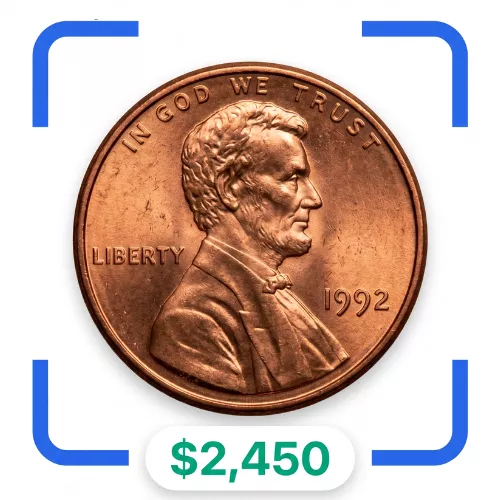


The United States Mint struck this Lincoln Cent in 1918 at the main facility in Philadelphia.
World War I was coming to an end that year, and the nation needed large amounts of small change for daily commerce.
Like other standard issues of the era, the Philadelphia Mint produced these pennies in a classic bronze alloy.
Because copper reacts easily with air and moisture, original bright coins often darken over time.
Collectors refer to pieces that keep their original copper color as Red or RD coins.
Most pennies from 1918 entered everyday circulation almost immediately after production.
Seeing a 1918 penny that survived in pristine, unworn condition is quite uncommon today.
A top-tier example of this penny brought an eye-catching $78,000 at Heritage Auctions.
The coin was certified in Mint State Red condition, often shortened to MS Red.
Mint State means the penny never saw any circulation and shows zero wear on its highest design points.
The Red designation means the surfaces still show the bright, natural copper shine from the day it was minted.
Heritage Auctions handled the sale, drawing serious interest from high-end Lincoln Cent specialists.
Prices at this level happen when multiple advanced collectors compete for an elusive registry-set coin.
A standard circulated 1918 penny will not sell anywhere near this record figure.
Heavy everyday use during the World War I era explains why high-grade examples are so scarce.
Millions of people spent these pennies on newspapers, streetcar rides, and groceries during the late 1910s.
Few people back then thought to set aside rolls of brand-new cents for future generations.
Most pieces that did survive ended up with brown or red-brown surfaces due to decades of exposure.
True full-red survivors from 1918 are extreme condition rarities in the numismatic market.
Lincoln cents are also among the most widely collected series in American numismatics.
When high collector demand meets an almost non-existent supply of top-grade coins, prices can rise dramatically.
The combination of historical era, full copper color, and flawless preservation makes this coin special.
You can start checking your coin by looking closely at the date and mint mark area.
Look at the front of the penny on the right side below the date 1918.
A Philadelphia strike will have no mint mark beneath the date.
Next, examine the overall color and surface quality of the metal under good lighting.
You want to see full, original orange-red luster across both the front and back of the coin.
Use a 5x or 10x magnifying glass to inspect Lincoln's cheek and the wheat stalks for any signs of rubbing.
If the high points show friction or dark toning spots, the coin will not qualify as full Red.
People often confuse normal brown or cleaned copper pennies with true Mint State survivors.
Cleaned coins look unnaturally shiny or pink rather than showing deep, authentic mint luster.
If you are unsure about the color or condition of your piece, you can use CoinKnow or Coin Value Checker to get a helpful preliminary read.
Only professional grading services can authenticate the official MS Red designation needed for top values.
If you want an answer in under a minute, try a closer look at which free coin identifier apps actually works.
Upload a photo and get an instant value, grade estimate, and error check — no jargon, no sign-up required.