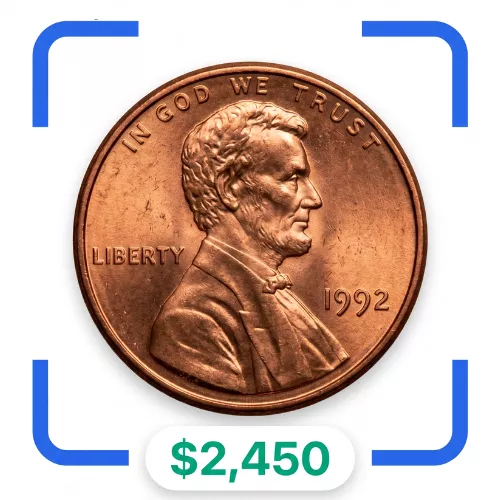


The Denver Mint struck this Lincoln Cent in 1919.
It is a regular issue copper penny from the early years of the series.
World War I had just ended, and commerce across the United States was moving fast.
Millions of bronze pennies rolled out of the Denver facility to keep up with daily trade.
Most of these coins went straight into cash registers, pockets, and penny banks.
Because they circulated heavily, finding an early branch-mint cent with its original copper color is very difficult.
This specific coin stands out because it kept its original bright red color for over a century.
A top-grade example of this coin brought $31,200 at Heritage Auctions.
Professional grading services certified the coin in Mint State Red condition.
Mint State means the penny never saw circulation and shows no wear on Lincoln's portrait or the wheat stalks.
The Red designation means the surface retains almost all of its bright, natural mint luster.
Auction bidders pay huge premiums for certified high-grade copper because the color is so fragile.
A sale at this level represents a rare opportunity for advanced Lincoln Cent collectors.
Most surviving 1919-D pennies are worn brown and trade for much smaller amounts.
Copper reacts quickly with moisture, air, and paper envelopes over time.
Most old cents turn from bright red to brown within a few years of release.
The 1919-D is not a rare coin in circulated condition, but it is an extreme condition rarity.
Denver had strike quality issues during this era, often producing soft details and grainy surfaces.
A 1919-D that combines a sharp strike, clean surfaces, and full red color is hard to find.
Collectors who build complete sets want every coin in matching, top-tier condition.
When multiple serious buyers compete for a single high-end survivor, prices rise quickly.
Start by checking the date on the front of the coin below Lincoln's bust.
Look for the small "D" mint mark directly underneath the 1919 date.
If there is no letter below the date, the Philadelphia Mint made your coin.
Use a 5x or 10x jeweler's loupe under good lighting to inspect the surface color.
Compare the color of the coin against a newly minted copper cent.
A coin that grades Red must show bright, original luster across at least 95 percent of both sides.
Watch out for cleaned coins that look unnaturally pink, shiny, or hairlined from harsh scrubbing.
You can use Coin Value Checker on your smartphone to scan your coin for a quick first pass.
Look closely at Lincoln's cheek and the tips of the wheat stalks on the back for any flattening.
Even tiny traces of wear will drop a coin from Mint State down to an About Uncirculated grade.
If manual comparison is not worth your evening, try our breakdown of each free coin identifier apps we tried.
Upload a photo and get an instant value, grade estimate, and error check — no jargon, no sign-up required.