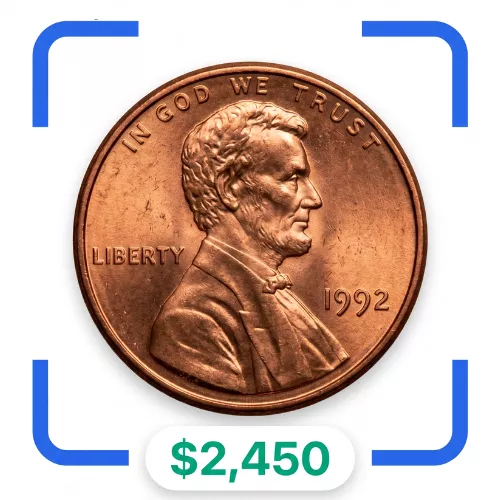


The 1919 Lincoln cent is a classic early penny from the Philadelphia Mint.
Workers struck these bronze coins during the busy period right after World War I.
The United States Mint produced millions of them to meet the needs of daily commerce.
Most of these coins quickly entered pocket change and spent decades buying goods.
Because they circulated heavily, finding an example today that kept its original copper luster is quite difficult.
Coins that kept their fiery copper color are designated as full Red by coin grading services.
This regular-issue penny holds rank 87 on our list of the top 200 most valuable coins.
An exceptional example of the 1919 cent once sold for an astounding $18,000.
Heritage Auctions handled the sale of this standout piece.
A professional grading service certified the coin in Mint State Red condition.
Mint State means the penny never saw any circulation wear in daily life.
The Red designation means the copper metal still shows its bright, original mint color over almost the entire surface.
Top collectors compete fiercely whenever a specimen with this level of pristine color crosses the auction block.
That intense bidding drove the final hammer price up to the record $18,000 figure.
The high price tag comes down to condition rarity rather than total mintage.
Copper reacts easily with moisture, air, and skin oils over time.
Most old bronze pennies naturally turn brown or develop dark spots as they age.
A 1919 Philadelphia cent in full-red condition is an extreme outlier among surviving pieces.
Someone had to store this coin in nearly perfect conditions for over a century to keep its color.
Lincoln cent collectors love building full sets of bright, uncirculated coins.
When very few coins exist in top grades, serious collectors are willing to pay huge sums to own them.
Average circulated pieces from this year remain common and trade for modest sums, but the top-grade coins are true treasures.
You can identify this coin by checking the front side below Lincoln's bust.
Look for the date 1919 on the right side of the portrait.
There should be no mint mark letter beneath the date, which indicates the Philadelphia Mint made it.
Examine the surfaces under good lighting to see if any original red-orange glow remains.
A 5x or 10x magnifying loupe will help you spot tiny scratches or signs of wear on Lincoln's cheek and hair.
If you see brown tones or dull gray patches, the coin will not qualify for the valuable Red designation.
People often confuse normal worn pennies with rare mint-state examples.
You can scan the coin with CoinKnow to get a fast initial read on what you have found.
To reach top market value, a professional grading firm like PCGS or NGC must certify the coin as Mint State Red.
A phone camera and which free coin identifier apps is worth installing will get you most of the way there.
Upload a photo and get an instant value, grade estimate, and error check — no jargon, no sign-up required.