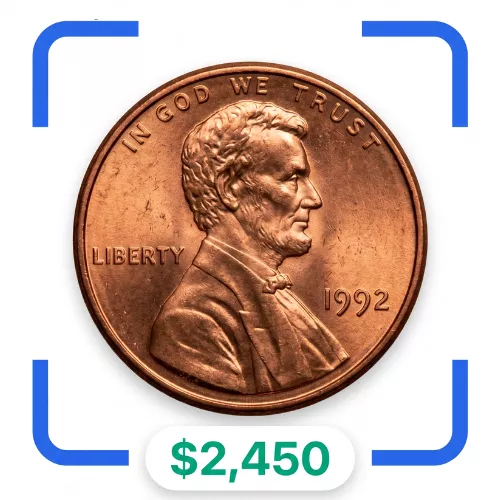


The Philadelphia Mint struck hundreds of millions of Lincoln cents in 1920.
World War I had ended, and the United States economy needed plenty of small change for daily commerce.
Because the main facility in Philadelphia produced them, these coins do not have a mint mark below the date.
Most of these bronze pennies went straight into pockets, registers, and piggy banks across the country.
Finding a standard circulated 1920 penny today is fairly easy for most collectors.
However, finding one that escaped circulation entirely while keeping its original metal surfaces is a different story.
Over the decades, environmental exposure turns the original red copper into a mellow brown tone.
While many brown pennies are heavily worn, an uncirculated piece with full strike details remains a special find.
An extraordinary example of this date crossed the block through Heritage Auctions.
Bidders competed aggressively until the final price reached an astonishing $26,400.
The coin was certified in Mint State with a Brown designation, often shortened to MS BN in grading reports.
A Mint State grade means the penny never saw actual spending and retains all of its original minted detail.
The BN label indicates that the copper surface has naturally toned brown over time rather than staying bright red.
Most collectors assume only fiery red copper coins can break major price barriers.
This sale proved that top-tier quality can push a brown cent to elite levels.
Certified holders protect coins like this and assure buyers that the surfaces are fully authentic and uncleaned.
The biggest driver for this specific coin is condition rarity.
A coin can have a massive original mintage and still be virtually impossible to find in pristine condition.
Most 1920 cents that turned brown did so while being handled by thousands of people.
Those circulated coins picked up scratches, bag marks, and heavy high-point wear.
This particular coin managed to preserve crisp details from the day it left the dies.
Lincoln cents have one of the largest and most competitive collector bases in numismatics.
When registry set builders compete for the finest known examples of a date, prices rise quickly.
Even with a brown surface designation, a coin at the absolute peak of preservation will command top dollar.
You can start by looking closely at the date on the right side of Lincoln's bust.
Make sure the date reads clearly as 1920 with no mint mark underneath it.
Use a good magnifying glass under direct, natural light to examine the surfaces.
You want to check the color and look for natural, even brown toning.
Be careful not to confuse original brown surfaces with coins that were cleaned and artificially darkened later.
A cleaned coin often shows faint hairline scratches or an unnatural, dull film across the fields.
Look at the high points on Lincoln's cheekbone, hair, and the wheat stalks on the reverse.
Any flatness in those areas means the coin was spent in daily commerce and will carry a modest value.
If you want a fast second opinion, you can scan the piece with CoinKnow or the Coin Value Checker app to get a rough idea of its variety and condition.
Keep in mind that five-figure prices belong only to certified coins at the absolute peak of the grading scale.
Always handle your old pennies by the edges to prevent skin oils from damaging the original surface.
Want the number now and the reasoning later? See our roundup of the best free coin identifier apps options.
Upload a photo and get an instant value, grade estimate, and error check — no jargon, no sign-up required.