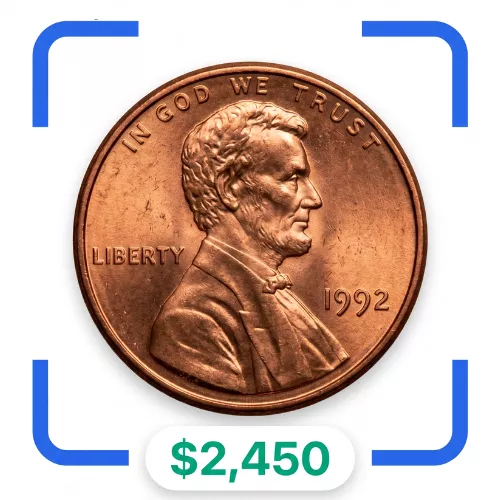


The Denver Mint struck this Lincoln cent back in 1920.
It is made of standard copper alloy from that era.
Coins from the Denver facility in the early 1920s often suffered from weak strikes and poor metal quality.
Many of these pennies entered daily circulation immediately to meet commercial demand.
Finding an early branch-mint Lincoln cent that survived without wear is difficult.
Finding one that kept its original copper color is even harder.
That makes this specific Denver issue stand out among early Lincoln pennies.
Heritage Auctions sold a top-tier example of this penny for $31,050.
The coin was certified in Mint State Red condition.
Mint State means the coin never circulated and shows zero friction on its highest design points.
The Red designation means the copper retained nearly all of its original bright orange luster from the minting press.
Most surviving 1920 pennies faded to brown or red-brown over the past century.
Collectors compete fiercely whenever a genuine full-red example from Denver crosses the auction block.
The final price reflects how rare this level of preservation is for a 1920-D cent.
The high price comes down to extreme condition rarity rather than total mintage.
Raw mintage numbers only tell part of the story for early twentieth-century pennies.
Copper reacts quickly to oxygen, moisture, and oils from human hands.
Denver cents from 1920 were also prone to planchet streaks and soft details.
Most pieces that escaped circulation still ended up with spots, stains, or dull brown surfaces.
A 1920-D in full-red condition is an extreme outlier among surviving survivors.
Set registry collectors need fully red coins to achieve top rankings, which pushes bidding to premium levels.
The typical worn example in an old jar is common and worth only a modest sum.
You can check your coin with a basic five-power or ten-power magnifying glass.
Look at the date on the right side of the obverse to confirm it reads 1920.
Look directly underneath the date for the small D mint mark.
If there is no mint mark below the date, the coin was struck in Philadelphia.
If you see an S, the coin came from the San Francisco Mint.
Check the surface color under a single direct light source.
To qualify as full red, at least ninety-five percent of the surface must show bright original copper color.
Beware of coins that have been chemically cleaned to fake a bright appearance.
Cleaned coins look unnatural, washed out, and have hairline scratches across the fields.
If you want a quick opinion before showing it to a dealer, you can scan the coin with Coin Value Checker to see where it fits.
Only an authentic, untouched coin with original mint luster will achieve top-tier grades.
The fastest way to get a number is to scan it — see our breakdown of each free coin identifier apps we tried.
Upload a photo and get an instant value, grade estimate, and error check — no jargon, no sign-up required.