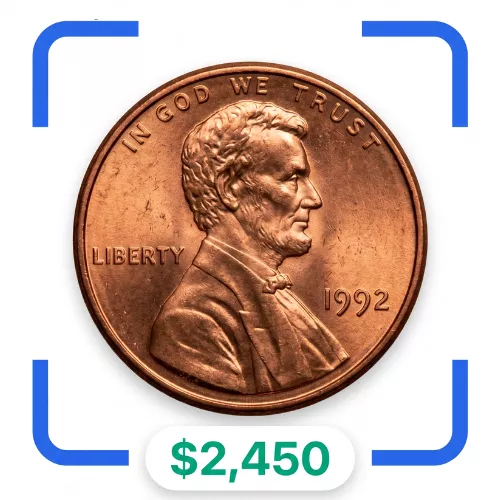


The 1920-S Lincoln cent came from the San Francisco Mint during an active era of American coinage.
San Francisco produced millions of bronze pennies that year to keep up with daily business needs.
Most of these pennies left the mint right away and spent years passing from hand to hand in change.
Because copper reacts easily to moisture and air, nearly every 1920-S penny turned brown very quickly.
Finding one today that retains its original fiery copper luster is an exceptional challenge for collectors.
This issue ranks at number 32 on the list of the top 200 most valuable Lincoln cents.
A pristine example of the 1920-S penny crossed the auction block at Heritage Auctions.
The bidding climbed rapidly until the coin hammered down for an impressive $48,875.
The coin earned a certified grade of MS Red, confirming it is in uncirculated condition with its original bright copper color intact.
The "MS" stands for Mint State, which means the coin never circulated in daily commerce.
The "Red" designation means at least ninety-five percent of the original bright mint color remains visible on both sides.
A price tag this high reflects a rare combination of flawless surface preservation and radiant original color.
Most 1920-S cents found in old collections or change jars are heavily worn and brown, so they trade for only a fraction of this record amount.
The true driver behind this high value is condition rarity rather than total mintage.
San Francisco struck plenty of cents in 1920, but almost none were set aside in protective storage when new.
Early branch mint cents from the 1920s often suffered from weak strikes and poor metal alloy mixtures.
As the decades passed, natural sulfur in the air reacted with the metal to turn almost every survivor a dull brown or dark red-brown.
Coin grading services separate copper coins into three color categories: Brown, Red-Brown, and Red.
A full-red 1920-S cent is so elusive that advanced Lincoln cent set builders actively compete to own one.
When an uncirculated example with full-red surfaces appears on the market, serious buyers pay large premiums to secure it.
You can begin checking your coin with a standard five-power or ten-power magnifying glass under a good desk lamp.
First, inspect the front of the coin to verify the date reads 1920.
Look just below the date to find the small "S" mint mark, which signifies that the San Francisco Mint struck it.
If there is no mint mark beneath the date, the Philadelphia Mint made your penny.
Next, examine the color across both Lincoln's portrait and the wheat ears on the reverse.
Look for bright orange and copper luster across the entire surface rather than a dark chocolate or uneven brown tone.
Make sure the high points on Lincoln's cheek and the tips of the wheat stalks show no signs of rubbing or wear.
If you are not sure whether your coin shows wear or holds enough color, you can scan it using Coin Value Checker or CoinKnow to get a helpful first look.
Keep in mind that genuine MS Red examples are extremely uncommon, and a professional grading service must verify them before they command auction record prices.
Want the value without the research? Start with a closer look at which free coin identifier apps actually works.
Upload a photo and get an instant value, grade estimate, and error check — no jargon, no sign-up required.