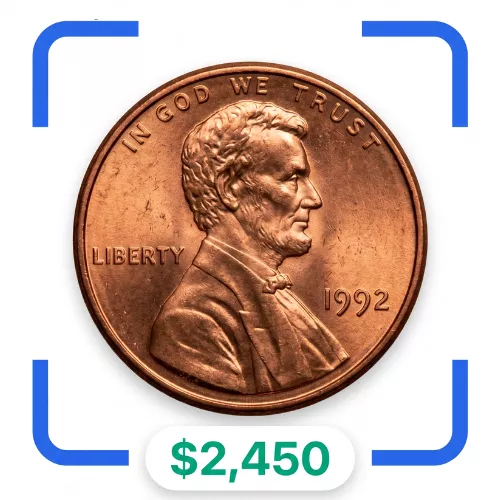


The Philadelphia Mint struck this Lincoln cent back in 1921.
Coins made in Philadelphia during this era carried no mint mark beneath the date.
Most pennies from the early 1920s went straight into daily circulation across the country.
People spent them on newspapers, candy, and streetcar rides.
Because they saw heavy use, finding an early Lincoln cent that never circulated is difficult.
Copper is also a very reactive metal that changes color as it meets the open air.
A 1921 cent that kept its original bright red color is a true standout in the series.
This coin ranks at number 28 on the list of the 200 most valuable pennies.
A premier example of this coin brought a massive price of $55,200 at Heritage Auctions.
Professional grading services evaluated this piece and gave it an MS Red grade.
The letters MS stand for Mint State, which means the coin shows no wear from circulation.
The Red designation means the copper retains at least 95 percent of its original mint luster and color.
Heritage Auctions handled the sale for this certified specimen.
Bidders competed aggressively because finding a 1921 cent in this pristine state is almost unheard of.
A price tag like $55,200 belongs strictly to the finest known survivors in the hobby.
Average examples found in pocket change will not bring this kind of money.
Condition rarity is the main factor driving the high price of this coin.
Philadelphia produced millions of cents in 1921, but almost all of them turned brown over the decades.
Moisture, handling, and air exposure quickly darken vintage copper coins from red to brown.
Collectors refer to this piece as an exceptional full-red condition survivor.
Very few collectors in the 1920s stored new pennies in protective holders.
As a result, only a tiny fraction survived without scratches, spots, or natural toning.
Lincoln cent enthusiasts who build top-ranked registry sets need full red coins to complete their sets.
When two or more wealthy collectors want the same top-grade coin, auction prices soar.
You can identify this coin by checking a few specific areas on the front.
Look below Lincoln's bust on the right side to find the date 1921.
Check the space directly beneath the date for a mint mark.
A Philadelphia coin will have a completely blank space under the numbers.
Next, examine the surface color under a good desk lamp.
You want to see a bright, fiery orange or copper-red glow across both sides.
If the coin looks chocolate brown or dull reddish-brown, it will not qualify for the top Red designation.
Use a 5x or 10x magnifying glass to inspect the high points on Lincoln's cheek and jaw.
Any slight flatness or dullness on those high spots indicates circulation wear.
If you are not sure about the color or condition of your coin, you can use CoinKnow or Coin Value Checker to get a helpful first look.
A quick phone scan can give you a baseline idea before you decide to seek an in-person expert opinion.
Do not clean your penny if you think it looks nice, as cleaning permanently destroys collector value.
Keep the coin in a soft flip or hard plastic holder to protect the delicate copper surface.
If you would rather not memorise mint marks, this comparison of every free coin identifier apps worth trying reads them for you.
Upload a photo and get an instant value, grade estimate, and error check — no jargon, no sign-up required.