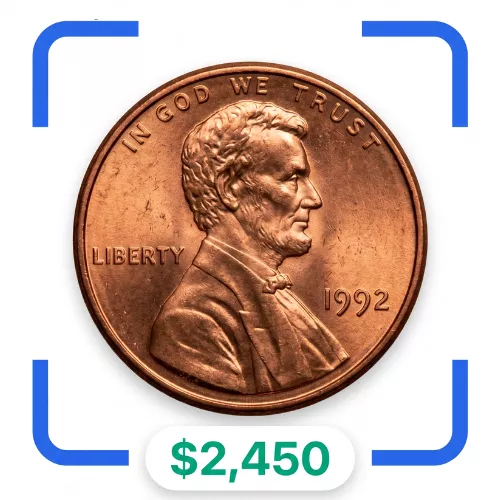


The Denver Mint struck this Lincoln Cent in 1922.
That year holds a special place in penny collecting history.
The Philadelphia and San Francisco mints did not produce any cents in 1922.
Denver stood as the only facility making pennies that year.
Because of this, every regular cent from 1922 should carry a small D mint mark below the date.
Worn dies at the Denver Mint created many odd striking issues during this run.
Finding a clean, well-struck example in full original red copper is quite difficult.
This regular issue coin ranks at number 59 out of 200 on the top coin list.
One outstanding example brought a massive price of $33,600.
Heritage Auctions handled the sale of this piece.
Professional coin graders certified the penny in Mint State Red condition.
The Mint State grade means the coin never circulated in daily trade.
It still shows full mint luster with no signs of wear on Lincoln's cheek or hair.
The Red designation means the copper kept at least 95 percent of its original bright color.
Copper naturally turns brown or red-brown over time when exposed to air.
Keeping full fiery red surfaces for over a century is what pushed this auction price so high.
You should keep in mind that typical worn pennies from this year will not reach this record figure.
Only the finest certified coins compete at this price level.
Condition is the main driver of value for this specific coin.
The 1922-D "Weak D" or full-D examples in full red are scarce.
Denver workers struggled with their equipment in 1922.
Many dies were overused and polished heavily to keep them working.
This resulted in weak details, mushy lettering, and faint mint marks across the production run.
A crisp strike with strong details is unusual for this date.
Finding that sharp strike paired with untouched red copper surfaces is even harder.
Most 1922 cents spent years passing through pockets and cash registers.
They became dark brown and worn down flat.
Collectors building top-tier sets want bright red coins with clear details.
When an uncirculated red coin appears on the market, serious buyers pay top dollar for it.
You can identify this coin by checking the obverse under a good light.
Grab a standard 5x or 10x magnifying glass to inspect the date area closely.
Look directly under the 1922 date on the right side of Lincoln's bust.
You should see a clear D mint mark stamped into the metal.
Do not confuse this coin with the famous "No D" variety.
The "No D" error shows no mint mark at all under the date due to a clogged or polished die.
A standard 1922-D will display a clear D or a slightly weak D.
Check the overall color and surface quality across the entire coin.
A true Red coin shows bright orange-copper tones with no dark spots or toning patches.
If you have trouble seeing fine details on your coin, you can use CoinKnow or Coin Value Checker to scan the piece for a quick first look.
Examine the reverse side to make sure the wheat ears show sharp lines and distinct grain tips.
High-grade examples with both clear mint marks and original red color deserve professional authentication.
The easiest way to check worth is a phone scan — see the free coin identifier apps picks that held up in testing.
Upload a photo and get an instant value, grade estimate, and error check — no jargon, no sign-up required.