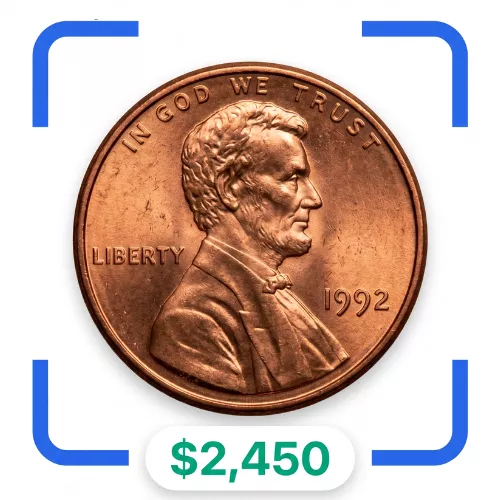


The 1923-S penny comes from the San Francisco branch of the United States Mint.
It belongs to the long-running Lincoln Cent series that collectors have loved for generations.
During the early 1920s, the San Francisco Mint had a reputation for producing coins with weaker details and rougher surfaces.
Most copper cents from this year entered everyday commerce immediately.
People spent them on daily goods, which wore away their sharp details very quickly.
As copper ages in circulation, it reacts with air and skin oils, turning from bright orange to dark brown.
Finding a 1923 San Francisco cent that kept its original bright red copper color is an absolute challenge today.
Because of this, the coin stands out as a major target for serious set builders.
A top-tier example of this cent sold through Heritage Auctions for an astonishing $67,563.
Professional coin graders certified the coin in Mint State Red condition.
Mint State means the piece never circulated in daily commerce and shows zero trace of wear.
The Red designation means the surfaces still show at least ninety-five percent of their original fiery copper luster.
Most surviving cents from this date have faded to brown or red-brown over the decades.
Bidders competed fiercely because certified specimens of this quality appear on the public market only rarely.
The final hammer price reflects the extreme difficulty of finding another one just like it.
This massive price belongs strictly to an elite certified example, not typical pocket change.
The main driver of value here is condition rarity rather than total mintage alone.
San Francisco struck millions of pennies in 1923, so worn examples are relatively easy to find.
However, the minting facility at San Francisco handled these planchets and freshly struck coins quite roughly.
Employees dropped coins into large storage bins, leaving contact marks and scratches on the soft metal.
On top of that, humid coastal air often caused the freshly minted copper to tone and spot early on.
Very few contemporary collectors saved uncirculated rolls directly from the San Francisco Mint in 1923.
Because so few original pieces escaped circulation and moisture, fully red survivors are incredibly scarce.
When high-grade collectors try to complete a premier Lincoln set in full red, this specific issue creates a huge hurdle.
High demand paired with an almost nonexistent supply of top-grade pieces drives the market value to huge heights.
To inspect your coin, you will need good lighting and a simple magnifying glass or jeweler's loupe.
Start by checking the front of the coin to confirm the 1923 date below Lincoln's shoulder.
Look directly under the four digits of the date for the small "S" mint mark.
If there is no mint mark below the date, the coin was struck in Philadelphia, which is far more common.
If you see a "D", it was made in Denver.
Next, examine the overall color and surface quality across both sides of the coin.
A true Red coin will show bright, reflective copper surfaces rather than a dull, dark brown tone.
Inspect the high points on Lincoln's cheek and jacket to make sure there is no friction or rub from circulation.
If you are unsure about what you have, a mobile app like CoinKnow or Coin Value Checker can help you do a quick first pass on the details.
Remember that worn or brown 1923-S pennies are relatively common, but pristine red pieces remain extraordinarily valuable treasures.
Want the short version of all this? our breakdown of each free coin identifier apps we tried gives you a price from a photo.
Upload a photo and get an instant value, grade estimate, and error check — no jargon, no sign-up required.