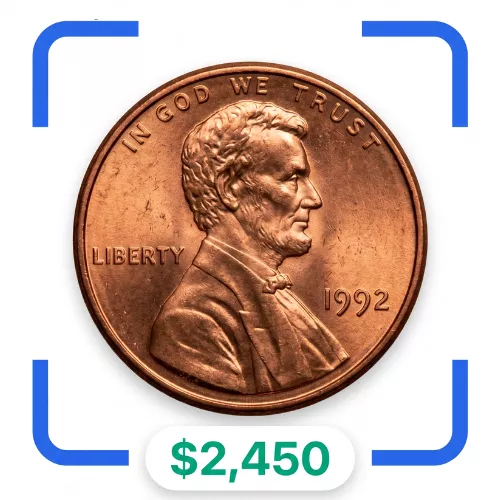


The San Francisco Mint struck this Lincoln cent back in 1924.
It is made of copper, just like other classic wheat pennies from that era.
Most branch mint pennies from the 1920s saw heavy use in everyday circulation.
San Francisco produced far fewer cents than Philadelphia in those years.
Finding an early San Francisco penny is exciting for many collectors.
Finding one that survived without wear and kept its original mint color is another challenge entirely.
This particular coin holds the number 22 spot out of the top 200 most valuable pennies.
A top-grade example of this coin sold for an impressive $66,000.
The sale took place through Heritage Auctions.
Professional coin graders certified the coin in Mint State with a full Red designation.
Mint State means the penny never circulated and shows no friction on its highest points.
The Red designation means the copper retains almost all of its bright, original orange-red luster from the day it was struck.
Copper naturally turns brown as it ages and reacts with air.
Keeping that fiery glow for nearly a century is what pushed the bidding up to $66,000.
Sales like this represent the absolute peak of the market for this date.
This coin is a classic example of a condition rarity.
The 1924-S is not impossible to find in worn grades.
However, getting a 1924-S in full red color is an extremely tough grade for the date.
The San Francisco Mint struggled with coin production quality during this period.
Dies were often worn out, leading to soft details on freshly minted pieces.
Few people saved brand-new rolls of pennies in California during the 1920s.
Most coins went straight into pocket change and quickly turned dark brown.
Very few pieces were set aside in conditions that protected the original copper surfaces.
Because so few survived in pristine red state, Lincoln cent specialists will pay huge sums to add one to their sets.
You can identify this coin by checking a few specific spots on the surface.
Look at the front of the coin to the right of Abraham Lincoln's chest.
Find the date 1924.
Look directly below the date for a small letter "S" mint mark.
If there is no letter below the date, the coin was made in Philadelphia.
Next, evaluate the color under good lighting.
A coin must show bright, original copper-orange color across both sides to earn the full Red designation.
Most 1924-S pennies you find in old jars or collections will be brown or reddish-brown.
Use a 5x or 10x magnifying glass to inspect the high points on Lincoln's cheek and jaw.
Any slight flatness or dullness in those areas means the coin has circulated.
If you want a quick first check on a coin you found, the Coin Value Checker app can help you get your bearings.
Remember that a typical circulated 1924-S penny is a neat piece of history, but only certified Mint State Red coins reach record price levels.
For a fast first pass, a closer look at which free coin identifier apps actually works does the job.
Upload a photo and get an instant value, grade estimate, and error check — no jargon, no sign-up required.