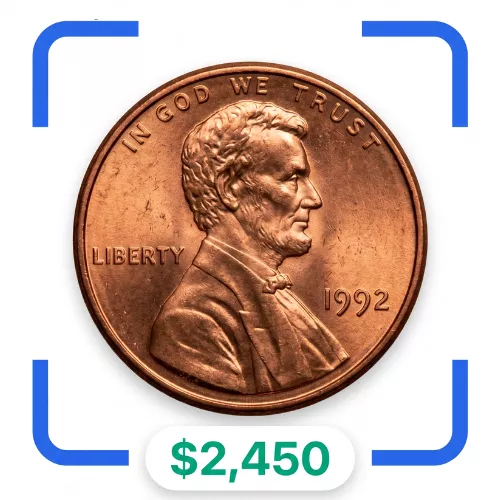


The Denver Mint struck this Lincoln cent back in 1926.
It is made of bronze, just like other standard pennies from that era.
Finding a 1926 penny from Denver in worn condition is fairly common for collectors.
What makes this specific piece special is that it kept its original, bright copper color for nearly a century.
Most pennies from the 1920s quickly turned brown as people handled them in daily trade.
Few people back then thought to put fresh Denver cents aside right from the start.
Because of that, coins from this run with intact surfaces are genuinely hard to find.
It holds the number 45 spot on the list of the top 200 most valuable pennies.
A top-grade example of this coin brought a massive $38,400 at Heritage Auctions.
A professional grading service certified the piece as MS Red before the sale.
The letters MS stand for Mint State, which means the coin never circulated in pocket change.
The Red designation means the surfaces still show at least ninety-five percent of their original fiery mint glow.
Bidders competed aggressively to win this piece because so few exist in this condition.
A typical circulated piece from the same year will sell for just a few dollars.
You need an exceptionally preserved coin in an official holder to reach prices anywhere near this record.
Copper is an active metal that reacts easily with moisture and air.
Over time, raw pennies oxidize and fade from bright red to dull brown.
This natural process creates what numismatists call condition rarity.
A 1926-D penny is not especially rare by itself in low grades.
The true rarity comes entirely from finding one in full-red condition.
Denver strikes from the mid-1920s also tended to have weaker details and softer dies than Philadelphia strikes.
That makes sharp, unblemished specimens even scarcer than their production numbers suggest.
Advanced set builders need top-level examples to complete competitive Lincoln cent registries.
When two or more dedicated collectors want the same immaculate coin, prices can climb very quickly.
Start by checking the front of the coin right below the date.
You should see the year 1926 clearly stamped on the right side of Lincoln's bust.
Look directly underneath the date for a small "D" mint mark.
If there is no letter below the date, the coin came from Philadelphia instead.
A simple 5x or 10x magnifying glass will help you inspect the surface quality.
Examine the color under a good desk lamp to see if it shows true copper-red luster.
Make sure you do not confuse a genuine red cent with one that has been harshly cleaned or chemically dipped.
Cleaned coins often have an unnatural, pale pink hue with hairline scratches across the fields.
If you want a quick first look at your coin, you can scan it using Coin Value Checker on your phone.
That scan will give you a rough baseline before you decide to send it to a grading company.
Always hold the coin by its edges so the oils from your fingers do not damage the surface.
Want to avoid a trip to the coin shop? which free coin identifier apps is worth installing covers the basics.
Upload a photo and get an instant value, grade estimate, and error check — no jargon, no sign-up required.