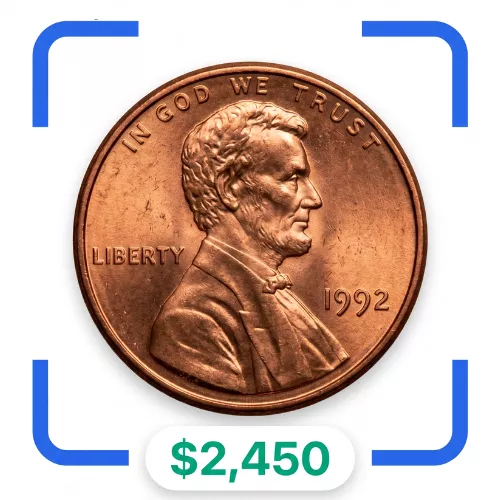


The 1928 Lincoln cent came out during the final boom years of the Roaring Twenties.
The Philadelphia Mint struck these pennies in large numbers for everyday commerce.
Workers made them using the standard bronze alloy of copper, tin, and zinc.
Coins struck in Philadelphia carried no mint mark beneath the date.
Most of these pennies circulated heavily through cash registers and pockets across the country.
Finding a standard 1928 penny is relatively easy for any collector.
Finding one that kept its original bright copper color is an entirely different challenge.
Copper reacts quickly with air and moisture over time.
Most survivors from this year turned brown or developed dark spots decades ago.
That natural chemical change makes bright red survivors from 1928 standout pieces in the series.
A top-tier 1928 Lincoln cent brought a winning bid of $22,800.
Heritage Auctions handled the sale of this standout piece.
The coin crossed the auction block in certified Mint State Red condition.
The Red designation means the coin retains at least ninety-five percent of its original mint luster.
Mint State means the penny never entered circulation and shows zero wear on Lincoln's cheek or hair.
Bidders competed aggressively because so few 1928 pennies survived in this state of preservation.
High-grade certified pieces consistently attract serious collectors looking to complete registry sets.
The $22,800 price reflects the fierce demand for the very best surviving examples.
A worn pocket-change example from the same year will sell for just a few cents to a couple of dollars.
Certification from a major grading service confirms the grade and guarantees the color designation for buyers.
The high value of this penny comes down to condition rarity rather than total mintage.
The Philadelphia Mint produced plenty of pennies in 1928 to meet economic demand.
People simply did not save rolls of pennies in clean, climate-controlled environments back then.
Raw bronze naturally oxidizes over nearly a century of storage.
Pennies gradually turn from red to red-brown, and finally to a dull chocolate brown.
A full-red surface requires almost perfect storage away from humidity, sulfur, and human touch.
Striking quality at the mint also varied during this era.
Many 1928 cents left the dies with soft details or minor surface flaws.
A coin with sharp detail, clean fields, and glowing red surfaces is an extreme statistical outlier.
Lincoln cent enthusiasts actively hunt for top-grade red pieces to build premier collections.
When an exceptional full-red 1928 cent appears, multiple buyers are willing to pay top dollar.
Start by looking at the obverse side of the coin beneath the date.
You should see the year 1928 with no letter underneath it.
The absence of a letter confirms that the Philadelphia Mint struck the piece.
Use a 5x or 10x magnifying glass to inspect the high points of Lincoln's portrait.
Check the cheekbone, jawline, and the hair above his ear for any signs of rubbing or dullness.
Look at the color under good natural lighting.
A genuine Red cent shows bright orange-copper luster across both sides.
Do not confuse a truly pristine coin with a piece that someone cleaned or dipped in chemicals.
Cleaned coins often have an unnatural pinkish shine and faint hairline scratches across the fields.
You can scan the coin with Coin Value Checker to get a quick read on its type and general condition.
Using CoinKnow is another fast way to run an initial check on an old penny before consulting an expert.
Never attempt to clean or polish a dark penny to make it look red.
Cleaning instantly ruins the collector value of an original vintage coin.
Only professional grading services can officially grant the Mint State Red designation that drives record prices.
If you have a stack to go through, which free coin identifier apps is worth installing speeds it up considerably.
Upload a photo and get an instant value, grade estimate, and error check — no jargon, no sign-up required.