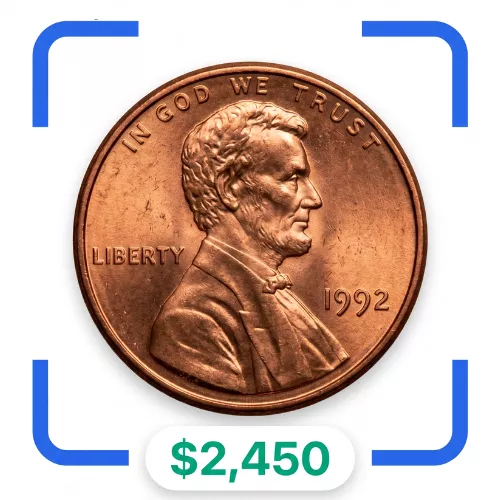


The Denver Mint struck this Lincoln Cent in 1930.
Like other cents of that era, workers made it from a standard bronze alloy.
The United States had just entered the Great Depression during this period.
Because of hard economic times, people spent every penny they could get their hands on.
Most 1930 pennies struck in Denver circulated heavily for decades.
Finding one that escaped daily commerce in pristine shape is very uncommon.
When copper stays untouched, it keeps its original bright red glow from the dies.
This particular regular-issue coin stands out because it managed to survive in full red condition.
Heritage Auctions handled the sale of this standout penny.
The winning bidder paid $33,600 to add it to their collection.
Professional coin graders certified the piece in MS Red condition.
The MS designation stands for Mint State, which means the coin never circulated in pocket change.
The Red label means the copper retains nearly all of its original mint luster and color.
Copper naturally turns brown or red-brown over time when exposed to air and moisture.
Top collectors pay massive sums for coins that preserve this bright copper surface without spotty toning.
An official grade from a respected service proves to buyers that the color is natural and untouched.
The main driver behind this high price is extreme condition rarity.
A standard 1930 Denver cent is easy to find in worn condition.
Worn pocket change from 1930 usually sells for just a few cents or dollars.
The market completely changes when you look at flawless, uncirculated specimens.
Only a tiny fraction of the original mintage survived without fingerprints, bag marks, or oxidation.
Lincoln cent enthusiasts compete aggressively to build top-ranking registry sets.
These specialized collectors want the finest known example for every single year and mint mark.
When a pristine 1930-D penny in full red comes to auction, multiple wealthy collectors fight for it.
That strong competitive bidding pushes the final hammer price into five-figure territory.
You can check your own coins at home with a few simple steps.
Start by looking at the date on the right side of Lincoln's bust.
You need to see the year 1930 clearly stamped on the front.
Look directly below the date to find the small "D" mint mark.
That "D" indicates the coin was struck at the Denver Mint.
If there is no letter below the date, the Philadelphia Mint made it instead.
Use a 5x or 10x magnifying loupe to examine the color and surface quality under good lighting.
Look to see if the coin has a bright orange-red luster or if it has turned brown.
Check for tiny scratches, rub marks on Lincoln's cheek, or dark spots on the fields.
If you want a quick first pass, you can scan the piece with Coin Value Checker to help identify the details.
Remember that most coins found in old jars or pocket change are brown and worn.
A typical circulated piece will not bring thousands of dollars like this record-setting specimen.
Only an uncirculated coin certified by a major grading service can achieve top auction prices.
A photo is usually faster than a chart — see our breakdown of each free coin identifier apps we tried.
Upload a photo and get an instant value, grade estimate, and error check — no jargon, no sign-up required.