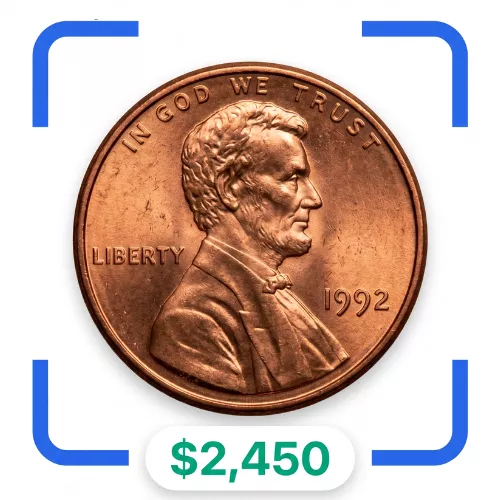


The 1930-S Lincoln cent was struck at the San Francisco Mint during the start of the Great Depression.
Like other pennies of its era, it features the classic bust of Abraham Lincoln on the front and two wheat stalks on the back.
The San Francisco facility produced far fewer cents than the main mint in Philadelphia during these years.
Because times were tough, people spent their change quickly rather than saving it.
Most of these pennies circulated heavily through daily trade.
As a result, finding an early San Francisco cent in pristine shape is difficult.
This particular regular issue stands out today because of its exceptional state of preservation.
It holds rank 60 among the top 200 most valuable coins on our list.
A premier example of the 1930-S penny sold for $33,350 at Heritage Auctions.
Professional coin graders certified this piece in Mint State Red condition.
Mint State means the penny never entered circulation and shows no wear on Lincoln's cheek or coat.
The Red designation means the copper retains its original bright mint luster across nearly its entire surface.
Over decades, bare copper reacts with air and moisture, naturally turning brown.
A penny that kept its fiery copper color for nearly a century is a rare sight.
Serious collectors will pay huge sums to own one of the finest known specimens of this issue.
Condition rarity is the main force behind this five-figure price tag.
While worn 1930-S pennies are common in old jars, full-red uncirculated examples are scarce.
Copper is a chemically active metal that darkens easily over time.
Most surviving 1930-S cents are now chocolate brown or a mix of red and brown.
Collectors who build top-tier sets require fully red coins to achieve high registry rankings.
The Lincoln cent series is one of the most widely collected sets in American numismatics.
This steady collector demand creates fierce competition whenever a top-graded piece appears at auction.
Only the absolute best survivors with full original color reach these record price levels.
You can identify this coin by checking two key areas on the front side.
First, look at the date to the right of Lincoln's chest to confirm it reads 1930.
Second, look directly beneath the date for a small "S" mint mark.
If there is no letter below the date, the penny was struck in Philadelphia instead.
Use a 5x or 10x magnifying glass to inspect the surface for wear and marks.
Check the highest points of the design, especially Lincoln's cheekbone and hair above his ear.
If those high spots look dull or smooth, the coin has seen circulation.
Look closely at the color under good natural lighting to see if it shows bright copper luster or dark brown patina.
If you want a fast initial read on your pocket change, a tool like Coin Value Checker can help you scan the details.
Keep in mind that average circulated 1930-S pennies carry modest collector value.
The huge auction prices belong exclusively to certified, unblemished coins that kept their original fiery red shine.
Want a faster way to price your coin? Take a look at a closer look at which free coin identifier apps actually works.
Upload a photo and get an instant value, grade estimate, and error check — no jargon, no sign-up required.