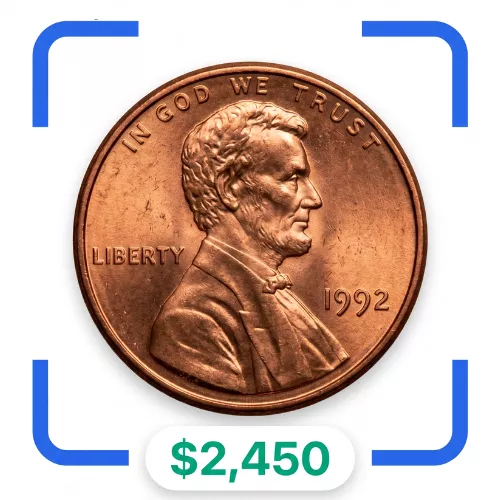


The Denver Mint struck this Lincoln cent during the depths of the Great Depression.
Economic hardship across the nation led to a sharp drop in overall coin production that year.
Because commerce slowed down, banks simply did not need huge numbers of new pennies.
This copper coin ranks at number 71 on our list of the 200 most valuable pennies.
While millions of Lincoln cents were made over the decades, finding an uncirculated 1932 Denver issue is a completely different challenge.
Collectors pay special attention to this date because of its low output and its Depression-era history.
A top-tier example of this coin brought an eye-opening price of $25,200 at Heritage Auctions.
The coin reached this figure thanks to its certified MS Red grade.
The "MS" stands for Mint State, which means the coin never circulated in daily commerce.
The "Red" designation means the copper metal retained its original, fiery mint color instead of turning brown with age.
Copper naturally tarnishes quickly when exposed to air and human touch, so finding one that stayed bright orange-red for decades is rare.
Professional coin graders examine surfaces under high magnification before awarding a grade like this.
Bidders at the auction recognized how few pieces exist at this level and pushed the final price into five figures.
Keep in mind that typical pocket change finds will not sell for this record amount.
The primary driver behind this price tag is condition rarity combined with historic timing.
People were struggling to buy basic necessities in 1932, so saving brand-new rolls of pennies was the last thing on most minds.
Most of the 1932-D pennies released by the Denver Mint went directly into daily circulation.
Over years of use, those coins rubbed against other pocket change and turned dark brown.
Moisture, fingerprints, and storage in old paper envelopes also ruined the original luster on surviving pieces.
Only a tiny fraction of the original mintage escaped circulation entirely.
An even smaller group survived without developing dark spots, fading to brown, or suffering bag marks from Mint handling.
When registry set collectors compete to own the finest known piece of a date, prices for full-red examples skyrocket.
Start by checking the date on the front of the coin, located on the right side just below Abraham Lincoln's chest.
You need to see the year 1932 clearly struck.
Next, look directly beneath the date for a small "D" mint mark.
That tiny "D" tells you the coin was struck at the Denver Mint rather than Philadelphia.
Philadelphia coins from this year carry no mint mark under the date.
Use a 5x or 10x jeweler's loupe under good lighting to inspect the color and surface quality.
Look to see if the surfaces show the original bright red luster or if the copper has turned to a mellow brown tone.
Check the high points on Lincoln's cheekbone, jawline, and hair for any signs of gray wear or flattening.
If you have an old jar of change and want a quick first pass, you can scan the piece with CoinKnow to confirm the basics.
Do not clean or rub the coin if it looks bright, because harsh cleaning strips away the original luster and ruins the value instantly.
An authentic 1932-D in full-red condition is an exceptional find that should be handled only by its edges.
Want the number now and the reasoning later? See this comparison of every free coin identifier apps worth trying.
Upload a photo and get an instant value, grade estimate, and error check — no jargon, no sign-up required.