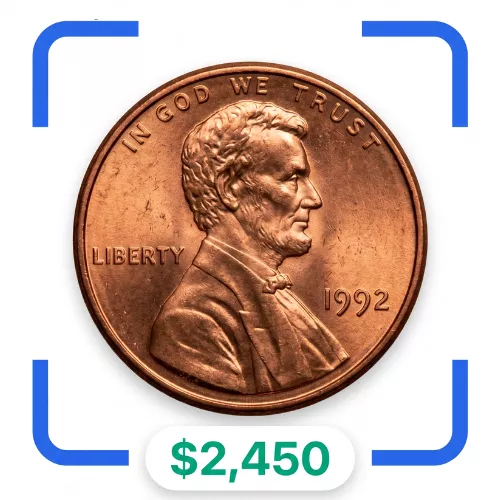


The Philadelphia Mint struck this copper Lincoln cent in 1933.
The United States was deep in the Great Depression at that time.
Commerce slowed down across the country, so people needed fewer new coins in daily trade.
Because demand dropped, the mint produced a much smaller batch of pennies that year.
Most of the pennies made in 1933 went straight into public circulation to help families buy basic goods.
Hardly anyone thought to set fresh, shiny rolls aside for future coin collectors.
Today, finding an original 1933 penny that still shows its bright, original copper color is a challenge.
A pristine example of this penny made headlines by selling for $52,800.
The sale took place through Heritage Auctions.
Professional coin graders certified the piece in MS Red condition.
The "MS" part stands for Mint State, which means the coin never circulated in daily cash transactions.
The "Red" label tells you the penny retains its natural, fiery copper luster from the day the dies struck it.
Copper naturally tarnishes to brown over time, so an intact red surface is a major factor in coin grading.
Top collectors compete aggressively whenever a top-graded survivor crosses the auction block.
It is important to remember that this huge price tag belongs to an extraordinary, certified coin.
The total mintage for the 1933 Philadelphia penny was unusually low for the Lincoln cent series.
Economic hardship meant nearly every single piece saw heavy use in pocket change.
Over the decades, ordinary wear and tear turned most 1933 pennies dull and brown.
Fingers transferred oils onto the copper, causing it to oxidize and lose its factory shine.
This dynamic created what numismatists call a condition rarity.
While worn 1933 pennies are not impossible to find, pristine Red examples are truly scarce.
Serious collectors trying to build complete, high-end sets need a full-red piece to fill the album slot.
When high demand meets an tiny supply of top-tier coins, market values climb quickly.
Start by checking the date on the front of the coin, below Lincoln's bust on the right side.
You want to see the year 1933 clearly stamped in the metal.
Look directly under the date to confirm there is no small letter stamped there.
The lack of a mint mark confirms the penny came from the main facility in Philadelphia.
Examine the overall surface under good lighting and a 5x or 10x magnifying glass.
Check if the metal shows full, bright orange-red luster or if it has aged into chocolate brown.
A coin with brown or red-brown surfaces will not fetch the same prices as a full Red specimen.
Look closely at Lincoln's cheekbone, jaw, and hair for any flat spots that reveal pocket wear.
If you want a fast second opinion on an old penny, you can scan it using Coin Value Checker on your phone to get an initial reading.
Be careful not to clean or polish an old penny, as that permanently ruins the surface and destroys collector value.
If your 1933 penny shows sharp details and original red glow, consider having a reputable grading service review it.
A scanning app saves a lot of squinting — see our roundup of the best free coin identifier apps options.
Upload a photo and get an instant value, grade estimate, and error check — no jargon, no sign-up required.