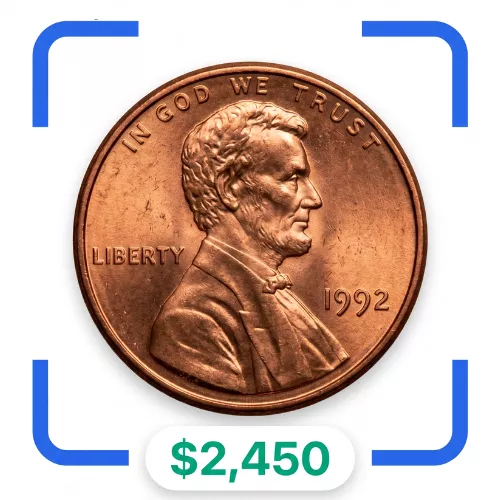


The Philadelphia Mint struck this special Lincoln cent back in 1937.
The United States Mint had only recently resumed making proof coins for collectors in 1936.
Because of that, proof pennies from 1937 are part of the early modern proof era.
Workers made these coins using specially polished dies and blanks.
Most 1937 proof cents came out with brilliant, mirror-like surfaces across the whole coin.
Only a tiny fraction showed a strong frosted texture on the raised design elements.
This specific coin ranks at number 72 on the list of the top 200 most valuable Lincoln cents.
A premier example of this coin brought an eye-catching price of $24,675.
The sale took place through Heritage Auctions.
Professional grading services certified the coin in Proof Cameo condition.
A Proof Cameo grade means the flat fields shine like a bright mirror while the raised portrait has a frosty look.
That visual contrast is exceptionally difficult to find on proof cents from the 1930s.
Top collectors compete aggressively whenever a verified cameo piece from this year enters the market.
Keep in mind that this high price belongs strictly to an elite, certified coin.
A standard 1937 penny found in pocket change will not bring this kind of money.
The main driver behind the $24,675 price tag is extreme condition rarity.
During the 1930s, mint workers did not deliberately produce cameo proof coins.
Cameo contrast only happened naturally on the very first few strikes from a freshly prepared die.
After striking just a handful of coins, the delicate frosting on the die wore away.
That means the vast majority of 1937 proofs look completely brilliant with no frosted relief.
Finding a surviving 1937 mirror proof with genuine Cameo contrast is a true rarity.
Lincoln cent enthusiasts actively hunt for these early cameo strikes to complete high-end registry sets.
The combination of classic copper beauty and sheer scarcity drives the market value up.
Start by checking the date on the front of the coin to confirm it reads 1937.
Look directly below the date to make sure there is no mint mark.
No mint mark indicates the coin was struck at the Philadelphia Mint.
Hold the coin under a single direct light source to examine the surfaces.
Use a 5x or 10x jeweler loupe to get a clear look at the details.
You want to see deep, reflective mirror fields surrounding Abraham Lincoln's portrait.
Check whether the bust of Lincoln and the lettering have a milky, frosted appearance that pops against the shiny background.
Do not confuse a standard shiny business strike with an authentic mirror proof.
Regular uncirculated cents have cartwheel luster rather than smooth, flat, glass-like fields.
If you want a quick first check on a promising piece, you can scan it with CoinKnow to help verify its general look.
You can also use Coin Value Checker to look up typical market ranges before you decide to send a coin to a professional grading service.
Always hold your coin by the edges so your fingers never touch the delicate proof surfaces.
If you want to know the value before you read another paragraph, see the free coin identifier apps picks that held up in testing.
Upload a photo and get an instant value, grade estimate, and error check — no jargon, no sign-up required.