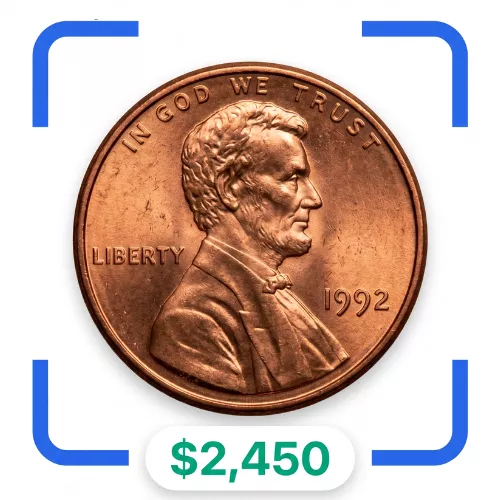


The Philadelphia Mint struck this special Lincoln cent in 1938.
Proof coins from this era were made specially for collectors rather than daily commerce.
The mint prepared polished blanks and used specially treated dies to strike each piece multiple times.
Most standard pennies made in 1938 went straight into circulation and ended up in pockets or cash registers.
This coin was different from the very start because it received extra care at the mint.
What makes this particular piece stand out today is its distinctive cameo finish.
Finding an early modern proof cent with this level of contrast is a genuine rarity for the series.
A certified example of this coin brought an eye-catching price of $14,400.
The record sale took place through Heritage Auctions.
Professional coin graders certified the piece in Proof Cameo condition.
A proof grade means the coin was made using the mint's high-standard proofing process.
The Cameo designation means there is a striking visual contrast between the design and the background.
High-grade certified pieces command top prices because they guarantee the coin is authentic and preserved in top condition.
You should keep in mind that regular pocket change from 1938 will not sell for figures like this.
Record prices belong only to coins that have survived in pristine, professionally certified states.
A 1938 mirror proof with Cameo contrast is hard to find in any condition.
During the late 1930s, the mint did not deliberately try to make coins with frosted designs.
Fresh dies naturally produced a brief frosting effect on the raised details for the first few strikes.
As the dies struck more coins, that frosted texture quickly wore away.
Because of this process, only a small handful of early strikes received the frosted cameo look.
Most surviving proofs from 1938 have completely shiny, brilliant surfaces across the whole coin.
Lincoln cent collectors actively hunt for pieces that show strong contrast between the fields and devices.
When high collector demand meets a tiny supply of surviving cameo coins, prices rise quickly.
You can start by looking at the date on the front of the coin.
Check the area directly below the 1938 date to confirm there is no mint mark.
The lack of a letter below the date shows that the coin came from the Philadelphia Mint.
Next, examine the surface texture of the fields under a good light.
A true proof coin will have smooth, reflective fields that look like a clean glass mirror.
Look closely at Abraham Lincoln's portrait and the lettering to check for a milky, frosted appearance.
The contrast between the frosted portrait and the mirror background is the hallmark of a Cameo proof.
Be careful not to confuse a genuine proof with a standard 1938 cent that someone polished with chemicals.
Polished regular coins look shiny all over, but they lack the sharp details and clean mirror depth of an actual proof strike.
A handheld 5x or 10x magnifying glass helps you inspect the sharpness of the rim and the letters.
If you want a fast initial check, a phone app like CoinKnow or Coin Value Checker can help you spot the basic differences.
After that, an in-person review by an expert grader is the only way to confirm a true cameo proof.
For anyone who just wants the value, this comparison of every free coin identifier apps worth trying is the fast lane.
Upload a photo and get an instant value, grade estimate, and error check — no jargon, no sign-up required.