

During World War II, the United States needed copper for the war effort.
The mint switched to zinc-coated steel planchets for pennies in 1943.
A few leftover bronze blanks from 1942 remained stuck in the hopper bins at the Philadelphia Mint.
These stray bronze planchets were struck by the 1943 dies by accident.
Because they lacked a mint mark, these coins represent the standard Philadelphia production.
Instead of shiny silver-colored steel, a tiny handful slipped out of the mint as standard bronze pennies.
This wartime error created one of the most famous slip-ups in American minting history.
In 2021, Heritage Auctions sold a standout specimen of this wartime rarity for $372,000.
The coin was certified in MS-62 Brown condition.
An MS-62 grade means the penny is in uncirculated mint state condition with only minor contact marks.
The "Brown" label describes the natural, darker patina the bronze developed over decades.
High-profile collectors compete fiercely whenever a genuine uncirculated piece surfaces in a major public sale.
Certified examples command top dollar because professional grading services guarantee the authenticity of the metal.
Record prices like this reflect top-tier certified coins rather than average pocket change finds.
Extreme rarity drives the massive demand for this issue.
Only roughly 20 genuine bronze cents from the Philadelphia Mint in 1943 are known to exist.
This specific record-setting coin has a colorful past that collectors love.
A fourteen-year-old boy named Marvin Wallace Beyer Jr. discovered the coin back in 1957.
His father spent $700 on metallurgical testing back then to prove it was real.
That was a very large sum of money at the time to verify a single penny.
The coin also features distinctive eye appeal with vibrant blue toning resting over lustrous olive-brown surfaces.
The mix of low survival numbers, strong wartime history, and unique look keeps values high.
The first step is checking the date and mint mark on the front of the coin.
Look for the clear date 1943 with no letter below it, which marks it as a Philadelphia coin.
Next, you need to perform the magnet test.
Steel pennies stick firmly to a magnet, but a genuine bronze penny is non-magnetic.
This is the most counterfeited error coin in American numismatics.
Deceptive fakes are often common 1943 steel cents that someone coated in copper to fool buyers.
A simple kitchen magnet immediately eliminates those copper-plated steel fakes.
You also need an accurate digital scale to check the weight.
A true bronze cent weighs 3.11 grams, while a steel cent weighs roughly 2.7 grams.
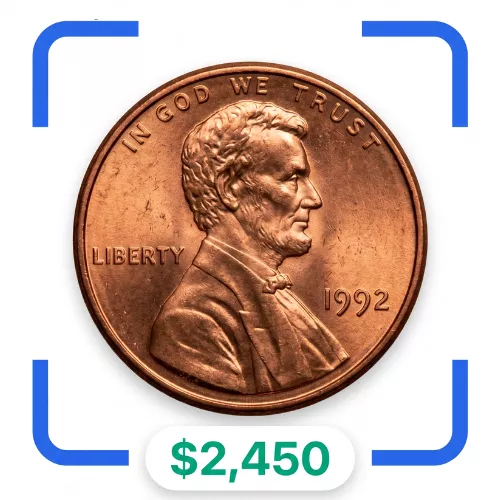
If you want a quick check on your pocket change, a scanning app like Coin Value Checker can help you identify basic coin types before you seek professional testing.
Any potential genuine find should be sent to a major grading service for complete metallurgical certification.
If you want confirmation without a dealer visit, see our roundup of the best free coin identifier apps options.
Upload a photo and get an instant value, grade estimate, and error check — no jargon, no sign-up required.