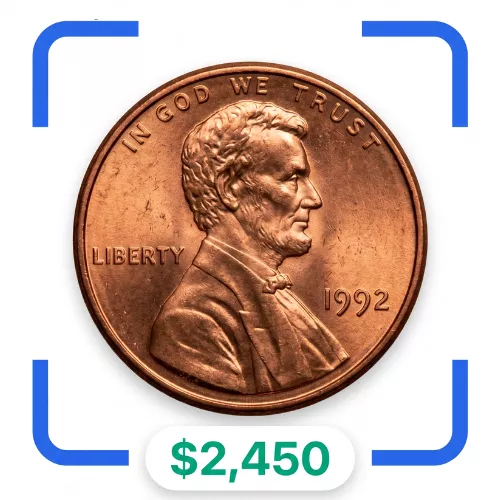


During World War II, the United States needed copper for ammunition and military equipment.
Because of that shortage, the Denver Mint switched to zinc-coated steel planchets for pennies in 1943.
Steel pennies from that year are silvery-gray and very common.
A tiny mistake happened when a stray bronze blank from 1942 got stuck in a hopper at the Denver facility.
That lone blank made its way into the coining press and was struck with regular 1943 dies.
The result was the 1943-D bronze Lincoln cent, an unintended wartime error.
It remains the only confirmed bronze penny ever struck at the Denver Mint in 1943.
The sole 1943-D bronze cent sold at public auction through Heritage Auctions in 2021.
The winning bidder paid $840,000 to take it home.
This same coin had traded hands privately for $1.7 million back in 2010.
Professional coin graders certified the coin as MS-64 Brown.
The "MS" stands for Mint State, meaning the coin never saw actual circulation in pocket change.
The number 64 indicates a high-end uncirculated coin with only tiny contact marks from handling at the mint.
The "Brown" designation describes its natural copper color, which has mellowed over decades rather than staying bright red.
Because it is a certified original in high grade, top collectors were willing to spend huge sums to own it.
The biggest reason for the massive price is simple: it is literally unique.
While a handful of 1943 bronze cents are known from Philadelphia and San Francisco, only one exists from Denver.
A former Denver Mint employee owned the coin for many years before it ever entered the collector market.
When it finally surfaced, it became one of the most famous error coins in American history.
Lincoln cent collectors are some of the most competitive hobbyists in the world.
To build a truly complete set of Lincoln cents by date and mint mark, you need this single coin.
That extreme supply limit creates intense demand whenever the piece becomes available.
You can check a 1943 penny at home with a few simple tests.
First, look at the front of the coin directly below the date of 1943.
You should see a small "D" mint mark stamped beneath the numbers.
Next, look at the color of the metal under good lighting.
A genuine bronze error has a warm copper-brown color rather than the bright silver tone of standard 1943 steel cents.
The most important check is the magnet test.
A real bronze penny contains no steel and will not stick to a household magnet at all.
Standard 1943 steel pennies will snap firmly to a magnet every time.
If you have a scale that measures in grams, weigh the coin.
A bronze penny should weigh right around 3.11 grams, while a steel version weighs about 2.7 grams.
You should be very cautious because altered coins and copper-plated steel fakes are extremely common.
You can snap a clear photo with CoinKnow or Coin Value Checker to get a fast first opinion on your coin.
If you still believe you have a genuine bronze 1943-D, you must submit it to a professional grading service for laboratory testing.
For anyone who just wants the value, this comparison of every free coin identifier apps worth trying is the fast lane.
Upload a photo and get an instant value, grade estimate, and error check — no jargon, no sign-up required.