

The United States Mint switched to zinc-coated steel for pennies in 1943 to save copper for the war effort.
A tiny number of bronze planchets from 1942 remained stuck inside the supply bins at the mint facilities.
Press operators loaded these leftover blanks into production runs by mistake.
The San Francisco Mint struck standard steel coins that year, but a few bronze blanks slipped through the dies.
The 1943-S bronze Lincoln Cent is one of the most famous transition errors in American history.
Only a tiny group of authentic examples made it out of the San Francisco facility into circulation.
This wartime error turned an everyday pocket penny into a legendary numismatic rarity.
Standard bronze cents were not supposed to exist at all during that single production year.
Finding a real bronze cent with the S mint mark is an event that draws national attention.
Heritage Auctions sold a premier example of this rarity in 2016 for $456,000.
The coin was certified in Mint State 62 Brown condition by a major grading service.
The Mint State 62 designation means the penny was never spent in daily commerce.
It shows faint surface marks from handling inside the mint, but it has no true wear from circulation.
The Brown label describes its natural aged color after decades of exposure to air.
Top collectors competed aggressively for the coin because so few ever appear on the open market.
Bidders place high trust in third-party authentication before spending six-figure sums on wartime errors.
The final hammer price set a major benchmark for San Francisco bronze cents across the entire hobby.
The primary driver behind this coin's value is its extreme scarcity.
Researchers have confirmed only five genuine 1943-S bronze cents in existence.
This specific specimen represents another of the five known 1943-S bronze cents.
Prior sales of this specimen at various auctions have reflected the broader trajectory of the market for the coin.
Collector demand for 1943 off-metal errors remains consistently high across every generation of collectors.
Finding an example in uncirculated condition is nearly impossible when so few survive anywhere.
Almost every Lincoln cent registry collector dreams of owning a wartime bronze error.
The historic nature of World War II metal shortages adds deep cultural interest to the coin.
When supply is locked at five pieces, any public sale creates an intense bidding battle.
Start your inspection by checking the date on the front of the coin.
Look for the 1943 date directly below the portrait of Abraham Lincoln.
Check for the small S mint mark located directly under the date digits.
Test the penny gently with an ordinary kitchen magnet.
A standard 1943 steel penny will jump immediately to the magnet.
A genuine bronze coin contains copper and will not stick to a magnet at all.
Be careful of copper-plated steel cents that scammers create to fool everyday collectors.
Watch out for altered dates where someone ground down a 1948 penny to look like a 1943.
Use a magnifying glass or a pocket loupe to inspect the shape of the number three.
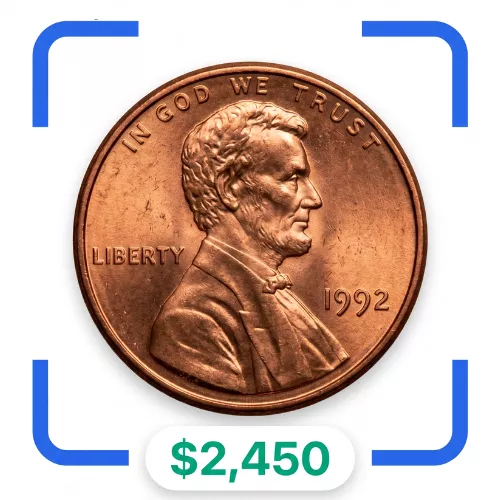
You can use Coin Value Checker on your smartphone to run a quick first pass when you want to examine an unfamiliar penny.
A mobile scan helps you double-check basic features before you spend money on formal grading.
Any potential discovery piece requires official submission to a professional grading company.
Do not assume an old brown 1943 penny in your pocket is worth thousands of dollars.
Record auction prices belong strictly to genuine pieces that pass expert laboratory authentication.
Skip the cross-referencing entirely and see which free coin identifier apps is worth installing.
Upload a photo and get an instant value, grade estimate, and error check — no jargon, no sign-up required.