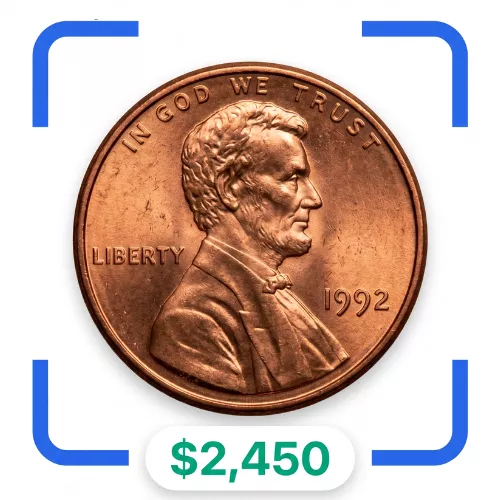


The 1945-D Lincoln cent comes from the final year of World War II.
The Denver Mint struck these pennies using recycled brass shell casings along with copper.
This wartime alloy gave the coins a slightly different composition than pre-war bronze pennies.
Denver produced a massive number of pennies in 1945 to keep up with wartime commerce.
Because so many were made, worn examples are very common in pocket change.
Finding one that retained its original bright copper luster is a completely different challenge.
Collectors rank this issue among the most desirable regular strikes in the Lincoln cent series when found in pristine shape.
A top-quality example of this coin brought a record price of $14,400 at Heritage Auctions.
The coin earned a certified grade of Mint State Red, often abbreviated as MS RD.
Mint State means the coin never circulated and shows no trace of wear on its highest details.
The Red designation means the coin still shows at least ninety-five percent of its original bright copper color.
Most copper coins turn brown or red-brown over time as they react with the air.
Heritage Auctions sold this specific piece to a collector competing for the finest registry set.
Bidders paid this premium because so few specimens survived without spots, marks, or color fading.
Raw mintage numbers do not tell the whole story for this coin.
Denver struck hundreds of millions of pennies in 1945, so the date itself is not rare.
The true value comes down to condition rarity.
During the 1940s, people did not store coins in modern airtight holders.
Paper coin rolls and canvas mint bags contained sulfur that reacted with the copper alloy.
As a result, most uncirculated rolls developed dark toning, carbon spots, or finger stains.
A 1945-D in full-red condition with flawless surfaces is an extreme rarity.
Lincoln cent collectors actively seek these top-grade survivors to complete advanced sets.
When multiple high-end collectors want the same coin, the price climbs quickly.
You can start checking your coin by looking at the date on the right side of Lincoln's portrait.
Make sure the date reads 1945 with a clear D mint mark stamped underneath it.
The D shows that the Denver Mint produced the coin.
Next, evaluate the overall color of the metal under good lighting.
Look for a bright, glowing orange-red surface across both sides of the coin.
If the penny looks chocolate brown or dull, it will carry standard collector value rather than a premium.
Use a 5x or 10x magnifying glass to inspect the high points on Lincoln's cheek and jawline.
You want to see complete mint luster with no friction or rubbing from circulation.
If you are sorting through a pile of old wheat pennies and want a quick first pass, you can scan the coin with Coin Value Checker to get basic details.
Keep in mind that five-figure prices only apply to coins certified in top condition by professional grading services.
For a fast estimate straight from a photo, check which free coin identifier apps is worth installing.
Upload a photo and get an instant value, grade estimate, and error check — no jargon, no sign-up required.