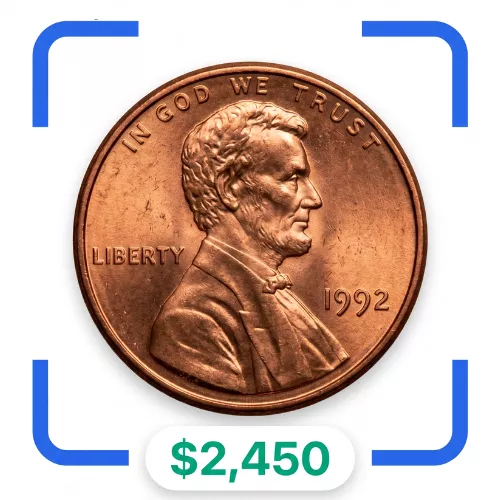


The United States Mint struck this Lincoln Cent in 1946 at the main facility in Philadelphia.
World War II had just ended, and copper was finally back in regular production for pennies.
Because it was made in Philadelphia, it carries no mint mark under the date.
Collectors group copper cents by their color, using brown, red-brown, and full red designations.
This particular coin earned the strict full-red status because it kept its original bright copper luster.
Finding a post-war penny that stayed completely red for decades is far harder than most people realize.
Heritage Auctions sold a top-tier example of this penny for a massive $14,950.
Professional grading services evaluated the piece and certified it in Mint State Red condition.
A grade of Mint State means the coin never circulated in daily commerce and shows no trace of wear.
The Red designation means the coin still shows nearly all of the bright orange color it had when it left the dies.
Serious collectors will pay huge sums when a common date survives in such immaculate, unblemished quality.
This sale set a major record for the 1946 Philadelphia issue.
The Philadelphia Mint made hundreds of millions of pennies in 1946, so raw circulated coins are very common.
Most of those coins spent years rattling in pockets, cash registers, and jars.
Over time, raw copper reacts with moisture and sulfur in the air, turning dark brown.
That natural chemical reaction makes full-red survivors exceedingly scarce today.
Only a tiny fraction of the original mintage was saved in dry, protected storage from day one.
The record price comes entirely from condition rarity, not from a low starting mintage.
Advanced Lincoln Cent set builders compete fiercely whenever an untouched, blazing red specimen appears on the market.
You can start by looking closely at the date on the front of the coin.
Look directly below the year 1946 to see if there is an empty space.
A Philadelphia strike has no mint mark below the date, unlike coins from Denver or San Francisco.
Next, examine the surface color under a clean, direct light source.
A full-red coin must display vivid, fiery copper surfaces across both the front and back.
If the surface looks chocolate brown or patchy, it will not qualify for the valuable red designation.
Use a 5x or 10x jeweler loupe to check the high points of Lincoln's cheek and hair for any rubbing.
If you want a fast second opinion, you can scan the piece with CoinKnow or Coin Value Checker to get an initial reading on its variety and general grade.
Remember that worn pocket change from 1946 is usually worth only a few cents.
Only flawless, certified Mint State Red coins can command thousands at major auctions.
If you are checking pocket change, which free coin identifier apps is worth installing is fast enough to keep up.
Upload a photo and get an instant value, grade estimate, and error check — no jargon, no sign-up required.