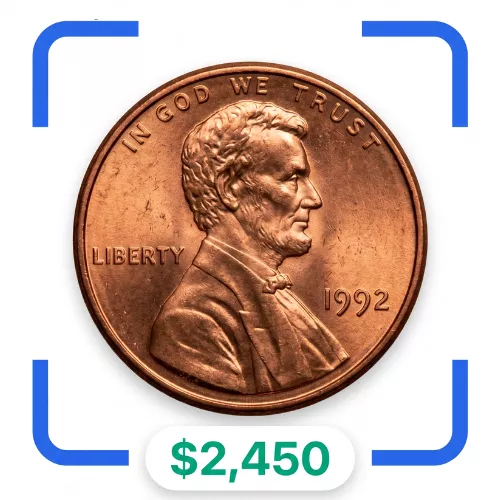


The United States Mint struck this Lincoln Cent in 1946 at the San Francisco facility.
World War II had just ended, and the mint returned to standard bronze alloy composition for pennies.
The San Francisco Mint produced millions of cents that year, but quality varied widely during the postwar rush.
The coin holds rank 93 on the list of top 200 valuable pennies.
While standard worn examples are common, pieces preserved in their original bright red copper state are tough to track down.
Most pennies from this run quickly toned brown or picked up heavy wear in daily commerce.
Finding an example that escaped circulation entirely makes it a true highlight among postwar wheat cents.
A premier example of the 1946-S Lincoln Cent crossed the auction block at Heritage Auctions.
Bidders competed aggressively until the final price realized reached an astounding $16,800.
Professional grading services certified the coin in Mint State Red condition.
The Red designation means the copper retained nearly all of its original bright mint luster without darkening over time.
A certified grade like this provides third-party proof that the surfaces remain virtually untouched since 1946.
Heritage Auctions handled the sale, giving high-end collectors confidence in the coin's authenticity and eye appeal.
Top-tier registry set builders often drive prices to records when such pristine specimens appear on the market.
Raw mintage numbers do not tell the whole story for postwar Lincoln cents.
The San Francisco Mint often used dies longer than normal, which led to soft strikes and poor luster on many coins.
Copper is also a very chemically reactive metal that oxidizes quickly when exposed to air and moisture.
Most 1946-S cents mellowed into Brown or Red-Brown shades over the decades.
Very few rolls survived inside dry, protective storage to maintain that vivid, fresh-from-the-mint orange-red glow.
When you combine a sharp strike with pristine red surfaces, the coin becomes an extreme condition rarity.
Serious Lincoln cent specialists need these top-grade coins to complete elite collections, which creates fierce competition when one surfaces.
Start by looking at the obverse side of the coin to check the date and mint mark.
You need to see the date 1946 clearly stamped to the right of Abraham Lincoln's chest.
Look directly below the date for a small letter S stamped into the field.
Use a 5x or 10x jeweler's loupe to inspect the surfaces for any wear on Lincoln's cheek and hair.
Check the color under good lighting to see if it shows full, natural red luster rather than brown or dark spots.
If you want a quick scan before buying professional tools, the CoinKnow app can help you examine the date and mint mark on your coin.
Be careful not to confuse a genuine full-red cent with an old brown coin that someone cleaned or chemically stripped.
Cleaned coins look unnaturally bright, pink, or washed out and carry very little collector value.
Keep in mind that typical pocket change finds will be brown and heavily circulated, while five-figure records belong strictly to flawless, certified specimens.
For a hands-off estimate, take a look at the free coin identifier apps tools we tested side by side.
Upload a photo and get an instant value, grade estimate, and error check — no jargon, no sign-up required.