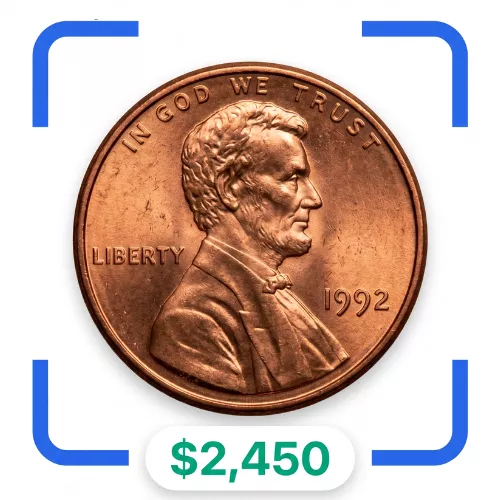


The Philadelphia Mint struck this copper Lincoln cent in 1947.
It is a standard circulating penny from the post-World War II era.
Millions of these coins entered daily circulation across the country.
Most of them were spent on small goods and wore down quickly over time.
Coins made of copper react easily to oxygen, moisture, and finger oils.
Because of this natural process, the vast majority turned brown or developed spots.
Finding a standard 1947 penny that survived without any wear or color change is not common.
Heritage Auctions sold a premier example of this coin for $21,600.
Professional grading services certified the coin in Mint State Red condition.
The term Mint State means the coin never circulated in daily commerce.
It retains all its original surface details exactly as it left the dies.
The Red designation means the coin kept at least ninety-five percent of its original bright copper color.
Copper coins this old rarely keep that fresh mint glow without turning brown.
Bidders paid top dollar because top-grade specimens with perfect color almost never come up for sale.
The high price tag comes down to condition rarity rather than total mintage numbers.
Late-series 1947 cents are easy to find in worn, brown condition.
However, coins in full-red condition are exceptionally difficult to find today.
Rolls of coins saved in the 1940s often suffered from damp storage conditions.
Paper wrappers and cardboard holders often caused coins to tone or turn dark brown over decades.
Collectors building complete Lincoln cent sets compete fiercely for coins with zero spots, zero fingerprints, and blazing color.
When a nearly flawless piece hits an auction, top collectors will pay thousands to own it.
A typical pocket change penny from 1947 is only worth a few cents.
Only the absolute finest certified survivors command four-figure or five-figure prices.
Start by looking at the front of the coin under a good desk lamp.
Look at the date just below Abraham Lincoln's chest on the right side.
The date must read clearly as 1947.
Check the space directly beneath the date for a mint mark.
A coin struck in Philadelphia has no mint mark below the date.
If you see a small letter D or S, the coin was struck at a different branch mint.
Next, use a magnifying glass with at least five times power to inspect the surface color and luster.
The coin must show a bright, fiery orange-red color across both the front and back.
If the surface looks chocolate brown or reddish-brown, it will not qualify for the full Red designation.
Check Lincoln's cheekbone and the wheat stalks on the back for any flat spots or signs of wear.
Even slight friction from being handled drops a coin out of the top uncirculated grades.
If you want a quick opinion before paying for professional grading, use a tool like Coin Value Checker or CoinKnow to scan the piece.
A phone scan helps you get a fast first pass on whether the strike and color are worth examining further.
Always hold your penny by the edges so you do not leave skin oils on the copper surface.
If you go coin roll hunting, a closer look at which free coin identifier apps actually works speeds up the sorting.
Upload a photo and get an instant value, grade estimate, and error check — no jargon, no sign-up required.