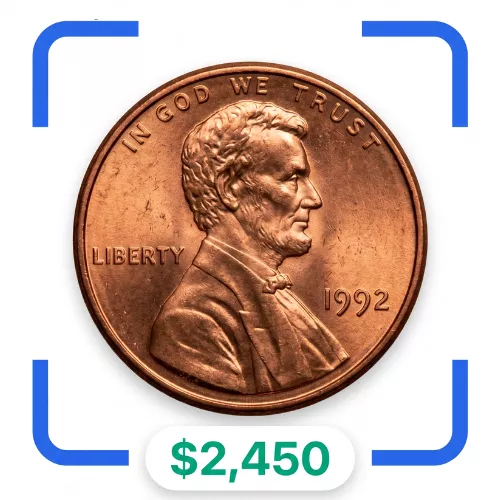


The Denver Mint struck millions of Lincoln cents in 1950.
These classic pennies feature Abraham Lincoln on the front and two wheat stalks on the back.
The United States Mint made them out of a bronze alloy with a rich copper base.
Most 1950-D pennies entered circulation and saw heavy daily use.
Because people spent them, finding an original coin with no wear is a tough challenge.
Finding one that still keeps its bright, freshly minted red copper color is even harder.
Copper reacts quickly with oxygen, moisture, and skin oils over time.
That natural chemical reaction turns bright copper into brown or red-brown over the decades.
Because of this, an untouched 1950-D penny in full red condition stands far apart from standard pocket change.
A top-tier example of this penny crossed the auction block at Heritage Auctions.
Bidders competed aggressively until the final price hit an astounding $20,400.
The coin was certified in Mint State Red condition, often shortened to MS Red.
A grade like this means the coin never circulated and shows no trace of wear.
The Red designation means the surface keeps at least 95 percent of its original mint luster and orange-red hue.
Major grading services inspect these coins under bright lights to verify the color and surface quality.
Only a tiny fraction of surviving cents ever earn this top color rating.
When an exceptional specimen appears at a major auction, specialized collectors pay huge sums to win it.
Raw mintage numbers do not tell the whole story for 1950-D pennies.
The Denver facility produced plenty of coins that year, so the date itself is not rare in low grades.
The high price comes almost entirely from condition rarity.
Many rolls of 1950-D cents were saved by collectors and dealers decades ago.
However, paper wrappers and humid storage conditions caused most of those stored coins to spot, tone, or turn brown.
Blemishes, contact marks from other coins, and weak strikes also ruined the surfaces of many uncirculated pieces.
A flawless strike paired with pristine, glowing red surfaces is an extreme anomaly.
Lincoln cent enthusiasts building registry sets constantly hunt for the finest known examples.
That intense collector competition drives the price into five figures for the very best pieces.
You can begin checking your pennies with a simple visual inspection under a good desk lamp.
Look at the front of the coin to the right of Lincoln's chest for the date 1950.
Just below the date, look for a small "D" mint mark stamped into the metal.
If there is no mint mark below the date, the coin came from the Philadelphia Mint instead of Denver.
Next, evaluate the color and surface quality using a 5x or 10x jeweler's loupe.
A full red coin must show bright, original copper color across both the front and back.
If the surfaces look chocolate brown or show dark patches, the coin is graded as Brown or Red-Brown.
Brown and circulated examples are very common and carry modest collector value.
If you want a quick starting check on a coin you found, you can use CoinKnow or the Coin Value Checker app to get an initial read on what you have.
Check the highest points of Lincoln's cheek and jaw for any signs of friction or dull gray rubbing.
Any light wear drops the coin out of the Mint State category immediately.
Always hold your coins by the edges so your fingers never touch the delicate fields.
For a quick, no-fuss estimate, our roundup of the best free coin identifier apps options is worth a look.
Upload a photo and get an instant value, grade estimate, and error check — no jargon, no sign-up required.