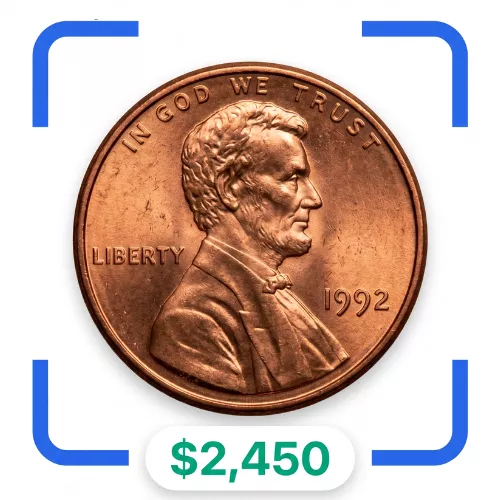


The United States Mint struck this Lincoln Cent in 1953 at the San Francisco branch.
It is made of standard bronze, which gives a new penny its bright copper look.
San Francisco produced millions of pennies that year for everyday pocket change.
Most of those coins went straight into circulation and wore down quickly.
Copper also reacts easily with air, moisture, and skin oils over time.
Because of that chemistry, finding an uncirculated 1953-S that kept its original bright red color is tough.
This piece stands out because it survived decades without picking up the usual brown tarnish.
A premier example of this coin brought a winning bid of $18,000 at Heritage Auctions.
Grading experts certified the coin in top-tier MS Red condition.
The MS stands for Mint State, which means the coin never circulated in daily commerce.
The Red designation means the surfaces still show at least ninety-five percent of their original fiery copper color.
Certified coins at this specific grade level are thoroughly examined for flaws, contact marks, and luster.
Collectors pay large sums for this exact grade because almost no other 1953-S pennies look this clean.
A verified grade from a major grading service gives high-end buyers total confidence in the surface quality.
A standard 1953-S penny from your pocket change is only worth a few cents.
The huge price tag on this coin comes purely down to condition rarity.
San Francisco strikes from the early 1950s often suffered from soft details or spotty planchets.
Many bags of these pennies were saved, but the coins inside slowly turned brown or developed dark carbon spots.
To reach a record price, a 1953-S must have clean cheekbones on Lincoln and flawless fields.
Full red surfaces are the most desirable color classification for any vintage copper cent.
Serious collectors building high-ranked registry sets compete aggressively whenever a top-tier red piece appears for sale.
That intense bidding competition among elite collectors drives the price up to five figures.
Start by looking at the front of the coin to the right of Lincoln's chest.
You should see the date 1953 clearly stamped in the field.
Right below the date, check for the small letter S mint mark.
If there is no letter below the date, the coin was struck in Philadelphia instead.
Use a 5x or 10x jeweler's loupe to inspect the surfaces under good lighting.
Check the color of the copper very carefully across both sides.
A coin described as Red must show bright, natural copper luster rather than dark brown or reddish-brown tones.
Make sure the coin has not been cleaned or polished with chemicals to make it look bright.
Cleaned coins have faint hairline scratches and a dull, unnatural shine that destroys their collector value.
If you are not sure what you have, a mobile tool like Coin Value Checker can give you a helpful first pass on the date and mint mark.
Keep in mind that average circulated pieces are common, and only pristine certified coins reach record sums.
Not in the mood to compare dates and mint marks by hand? Try this comparison of every free coin identifier apps worth trying.
Upload a photo and get an instant value, grade estimate, and error check — no jargon, no sign-up required.