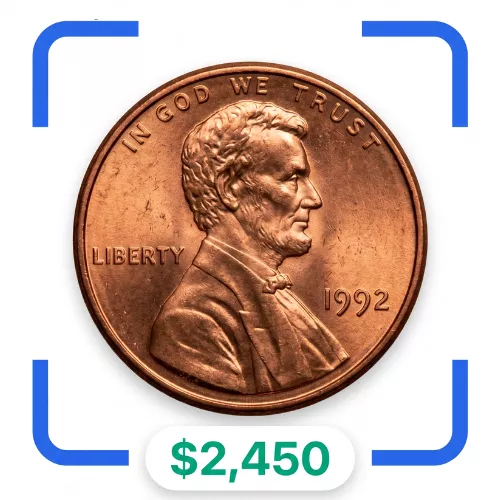


The United States Mint struck this Lincoln Cent in 1954 at the main facility in Philadelphia.
Like other standard pennies from the era, it was made from a standard copper alloy.
Coins made in Philadelphia during this time did not carry a mint mark below the date.
Millions of these wheat pennies entered circulation to handle everyday pocket change.
People spent them on newspapers, candy, and bus rides without thinking twice.
As a result, finding one from this run with its original bright copper color is genuinely tough.
This entry holds rank 62 on our list of the top 200 most valuable pennies.
A pristine example of this penny reached a price of $31,200 at a Heritage Auctions event.
Professional coin graders certified the coin in an exceptional Mint State Red condition.
The Red designation means the surfaces still show at least ninety-five percent of their original fiery copper color.
Most old copper turns brown or red-brown over time as it reacts with the air.
A piece that stays fully red without ugly spots or heavy contact marks sits in rare company.
Serious collectors will bid aggressively whenever a top-tier survivor like this comes up for sale.
This issue comes from the later years of the classic Wheat cent design.
While the total mintage was large, quality control at the Philadelphia Mint was often uneven that year.
Many coins left the dies with soft details or picked up marks while falling into storage bins.
Moisture and improper handling darkened countless other examples over the decades.
That makes this coin a classic example of condition rarity.
The date itself is not rare, but finding one at the absolute top of the certified population is extremely unusual.
Registry set collectors want the best known examples for their sets and will pay huge sums to secure them.
A typical worn penny from 1954 is only worth a few cents, making these elite survivors stand out even more.
You can begin checking your coins by looking closely at the date on the front right side.
Confirm the date reads 1954 with no letter below it.
The lack of a letter proves the coin was made in Philadelphia rather than Denver or San Francisco.
Next, examine the overall color under a good desk lamp.
You want to see a bright, glowing orange-red tone rather than chocolate brown or dull tan.
Use a five-power or ten-power magnifying glass to inspect the surface details.
Check Lincoln's cheek, jawline, and the high points of the wheat stalks on the back for signs of friction.
Any dullness on the highest points means the coin circulated and lost its Mint State status.
Look out for dark spots, fingerprints, or hairline scratches that drop the value of copper coins quickly.
If you want a quick opinion before paying for professional grading, scanning your coin with Coin Value Checker can give you an easy starting point.
Remember that only coins with flawless surfaces and full original red luster can compete for record prices.
Want to let software do the matching? our breakdown of each free coin identifier apps we tried is designed for it.
Upload a photo and get an instant value, grade estimate, and error check — no jargon, no sign-up required.