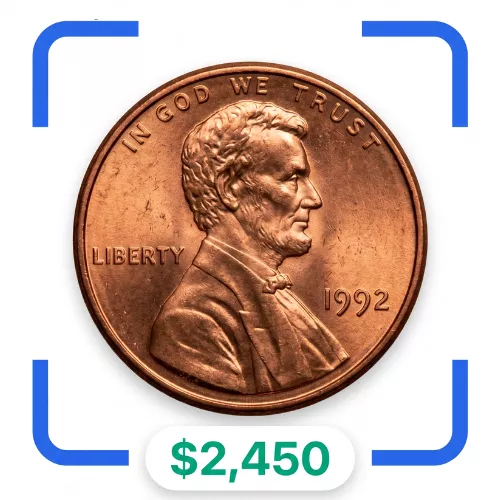


The Philadelphia Mint struck this famous Lincoln Cent in 1955.
It carries no mint mark beneath the date, which means workers made it in Philadelphia.
The coin is made of standard bronze, but it looks entirely different from any normal penny of that era.
During the hubbing process, a working die shifted between presses and received a misaligned impression.
The result was a drastic doubling across the entire front design.
Mint workers noticed the mistake after several thousand pieces were already mixed into huge production bins.
Officials decided it was too expensive to melt the entire batch, so they released the coins into regular circulation.
Collectors noticed them almost right away in change, creating an instant sensation in the hobby.
In 2018, Heritage Auctions sold a top-quality example of this coin for $114,000.
A professional grading service certified the piece at MS-65+ Red.
The MS-65 grade means the coin is in Mint State with only tiny, scattered contact marks.
The plus sign indicates that the coin sits at the very top quality range for that grade level.
The Red designation means the copper retains its bright, original fiery color rather than toning brown with age.
Most surviving examples circulated in pockets and cash registers for years, which caused heavy wear and darkened the metal.
Finding a piece that escaped everyday use and preserved its full original luster is exceptionally difficult.
Top collectors compete aggressively when a coin this clean appears at a public sale.
This piece stands as the most famous doubled die variety in the entire Lincoln Cent series.
Most doubled dies require strong magnification to spot, but this one is completely obvious to the naked eye.
Historical estimates suggest that roughly 24,000 examples escaped the mint before workers halted the press run.
That might sound like a large number, but millions of collectors want an example for their sets.
Every general coin guide highlights this specific variety, ensuring massive demand across multiple generations of hobbyists.
The supply simply cannot meet the huge number of people looking to buy one.
Condition plays a massive role in the final price of any surviving coin.
While worn examples still sell for serious money, fully red uncirculated coins occupy an elite price tier.
You can identify this coin by checking a few specific spots on the front side.
Look closely at the 1955 date on the right side of the portrait.
You should see two complete, separate outlines for each digit.
Next, check the motto IN GOD WE TRUST curving along the top rim.
The letters will show strong, side-by-side spread that you can clearly see without a magnifying glass.
The word LIBERTY on the left side shows the same severe doubling effect.
Notice that Abraham Lincoln portrait itself does not show the dramatic doubled spread seen on the letters and date.
Be careful not to confuse this variety with common mechanical doubling, which looks flat, shelf-like, and thin.
If you are not sure what you have found in an old collection, you can use Coin Value Checker or CoinKnow on your phone for a quick first look.
Because of the high price, people have made many deceptive counterfeits over the decades.
Always send any potential 1955 doubled die to a recognized grading service to confirm that it is genuine before buying or selling.
Want a number before you commit to more reading? See the free coin identifier apps tools we tested side by side.
Upload a photo and get an instant value, grade estimate, and error check — no jargon, no sign-up required.