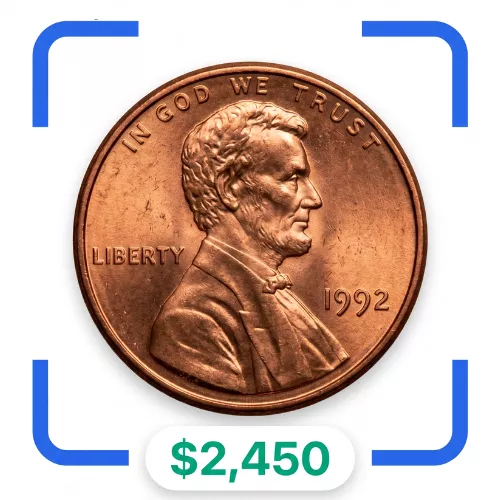


The United States Mint struck millions of wheat pennies in 1956.
The main facility in Philadelphia made a large portion of that year's mintage.
These pieces are classic Lincoln cents made with the traditional bronze alloy.
People often saved rolls of these cents right out of bank bags.
Because so many were saved, average uncirculated examples are still easy to find.
Finding one with flawless original copper color and no surface marks is another story entirely.
Most regular 1956 cents show spots, small contact marks, or faint signs of wear.
A completely untouched piece from this year stands far above the rest of the surviving coins.
An extraordinary 1956 penny crossed the block at Heritage Auctions for $57,600.
The coin achieved this high price because of its pristine Mint State Red grade.
Professional grading companies use the "Red" label only for coins that keep nearly all their bright mint luster.
Copper reacts quickly with air and moisture, so retaining that original bright orange shade is difficult.
A Mint State Red grade means the coin has no trace of wear from circulation.
It also means the surfaces look almost exactly as they did when the coin left the dies in 1956.
Top collectors compete fiercely when a piece at this high grade level becomes available.
That strong bidding drove the final hammer price to its five-figure sum.
The value of this coin comes down to pure condition rarity.
A standard 1956 cent is not rare in typical circulated or low uncirculated condition.
This specific coin sits at the very top of the certified population for 1956 Philadelphia cents.
During the minting process, planchets were tossed into bins and bagged together.
This rough handling left tiny nicks, scratches, and bag marks on almost every piece.
Finding a coin that completely escaped that heavy contact is rare.
Lincoln cent enthusiasts who build registry sets want the finest known example for every single date.
When there are only one or two coins at the top grade, demand always outpaces supply.
That rivalry between high-end collectors is what pushes the price to historic heights.
Start by looking closely at the front of the coin under a good light source.
Check the date on the right side below Lincoln's chest to confirm it reads 1956.
Look right beneath the date to see if there is a mint mark.
A 1956 penny struck in Philadelphia has no mint mark at all.
If you see a small letter "D" under the date, the coin was made in Denver instead.
Use a 5x or 10x magnifying glass to inspect the high points of the design.
Check Lincoln's cheekbone, hair, and shoulder for any dull gray or brown spots.
Turn the coin over and inspect the wheat stalks on the reverse.
The entire surface should show a clean, radiant copper-red shine with zero dark spots.
If you want a quick check on your pocket change, Coin Value Checker can help you scan coins and look up basic details right from your phone.
Keep in mind that typical pocket change finds will not command auction records.
Only professionally graded coins in near-perfect condition can bring this kind of top money.
If you would rather point a camera than read a table, check the free coin identifier apps tools we tested side by side.
Upload a photo and get an instant value, grade estimate, and error check — no jargon, no sign-up required.