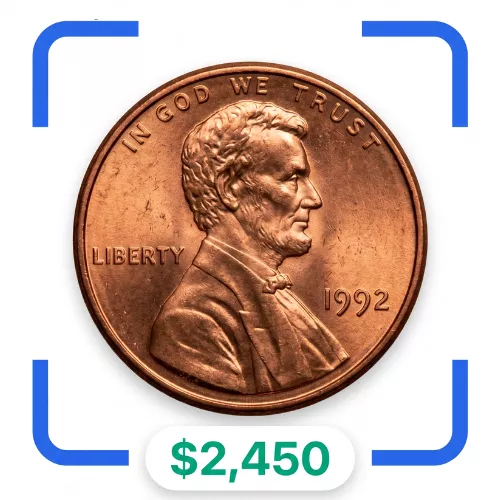


The Philadelphia Mint struck millions of regular Lincoln cents in 1958.
A manufacturing error created one of the rarest die varieties in American coinage that same year.
This coin is a doubled die obverse variety, often shortened to DDO.
The error happened when the mint worker misaligned the working hub and the working die between impressions.
Every coin pressed with that specific die received a strong, doubled image on the front.
It was struck in bronze and retains its bright original red copper color.
Ranked at number 6 out of 200 on the list of valuable coins, it is a legend among penny varieties.
A famous example of this penny crossed the auction block in 2018.
The coin sold through Stack's Bowers for an astounding $336,000.
Professional coin graders certified this specimen at MS-64 Red.
The MS-64 grade stands for Mint State 64, meaning the coin is uncirculated with only minor contact marks.
The Red designation means the copper kept almost all of its original mint luster and never turned brown from age or handling.
Certified grades give bidders confidence that a piece is genuine and well preserved.
A major auction house sale like this proves the immense market strength for verified top-tier varieties.
The 1958 doubled die is widely known among numismatists as the King of Doubled Dies.
Extreme rarity drives the value higher than almost any other penny variety.
There are only three confirmed examples known to exist in the entire coin collecting world.
The visual spread on the letters and numbers is bold and unmistakable.
Demand is always sky high because every advanced Lincoln cent specialist wants one.
A different example even broke the million-dollar barrier at GreatCollections in January 2023.
That later sale made the 1958 DDO the first Lincoln cent ever to pass the one-million-dollar mark at auction.
Look for a 1958 penny with no mint mark below the date.
No mint mark means the coin was made at the main mint in Philadelphia.
The doubling on this coin is so strong that you can see it with your naked eye.
Check the date first to see clear, distinct separation on all four digits.
Look closely at the word LIBERTY on the left side of the portrait.
Inspect the motto IN GOD WE TRUST along the upper rim for heavy, thick letter doubling.
This variety does not have faint doubling, so it announces itself immediately.
Do not confuse this true hub doubling with common machine doubling, which looks flat and shelf-like.
If you have an old cent and need a quick second opinion, you can scan it with Coin Value Checker to do a fast first pass.
Always remember that finding an authentic one is extraordinarily unlikely given that only three exist.
A professional third-party grading service must authenticate and grade any potential discovery before it holds serious value.
Want an estimate without comparing a dozen listings? Try our breakdown of each free coin identifier apps we tried.
Upload a photo and get an instant value, grade estimate, and error check — no jargon, no sign-up required.