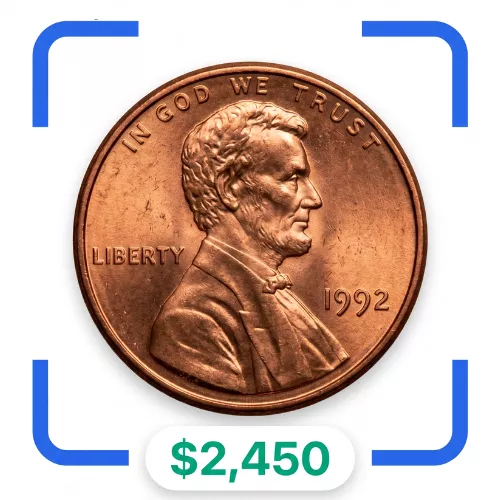


The year 1959 brought a major change to the Lincoln Cent series.
The United States Mint replaced the old wheat stalks design with the Lincoln Memorial on the reverse.
This particular penny was struck at the Denver Mint in 1959.
It is made of the classic 95 percent copper alloy used at the time.
Because it came from Denver, it holds a special place as the very first Memorial reverse cent from that facility.
You can easily spot billions of these in pocket change today.
Finding one in pristine, factory-new condition is a completely different challenge.
A phenomenal specimen of this coin crossed the auction block in March 2018.
Heritage Auctions handled the sale of the piece.
Bidders competed aggressively until the hammer fell at $8,625.
Professional coin graders evaluated the coin and certified it as MS-67 Red.
MS stands for Mint State, which means the coin never circulated in daily commerce.
A grade of 67 is extraordinarily high on the standard 70-point scale.
The Red designation means the copper retains almost all of its original fiery orange color from the day it was struck.
Only a tiny handful of 1959-D cents have ever received this grade without showing heavy bag marks or dark spots.
The Denver Mint produced over one billion pennies in 1959.
Raw numbers do not tell the whole story for collectors.
During this era, machinery at the Denver Mint ran fast and moved coins roughly.
Heavy canvas bags dumped fresh cents onto conveyor belts and into bins.
This rough handling created contact marks, scrapes, and nicks on almost every single piece.
Copper is also a very reactive metal that tarnishes quickly when exposed to air and moisture.
Most 1959-D pennies turned brown or picked up spots within just a few years.
As a result, a 1959-D cent with spotless surfaces and full original red color is a true condition rarity.
Collectors who build elite sets need a coin like this to represent the very first year of the Memorial design.
That strong collector demand drives prices sky-high when the finest known pieces come up for sale.
You will want to examine your coin under good lighting and magnification.
A simple 5x or 10x jeweler loupe works best for checking surface quality.
First, look at the front of the coin directly below the date 1959.
You should see a small "D" mint mark stamped under the numbers.
Flip the coin over to confirm it shows the Lincoln Memorial building rather than the earlier wheat ears.
Place the penny on a scale to ensure it weighs roughly 3.1 grams, which confirms the copper alloy.
Next, check the color of the metal.
To qualify as a top-dollar coin, it must display bright red luster rather than a brown or faded tone.
Inspect the open fields on both sides for tiny scratches, dings, or carbon spots.
If you want a fast way to check the basics, you can snap a photo with CoinKnow or Coin Value Checker on your phone to get started.
Keep in mind that typical pocket change finds will not be worth thousands of dollars.
Only certified, flawless coins earn record-setting prices at major auctions.
The practical choice for a full jar is our roundup of the best free coin identifier apps options.
Upload a photo and get an instant value, grade estimate, and error check — no jargon, no sign-up required.