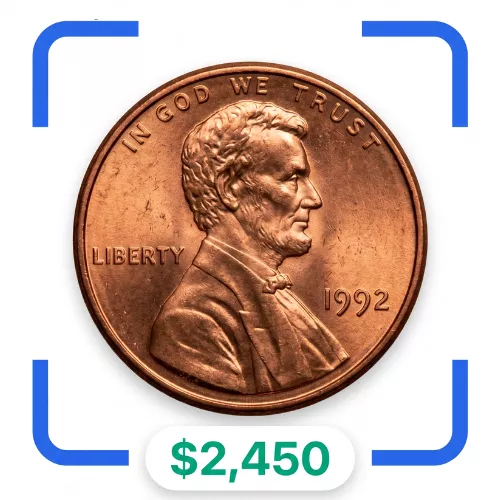


The Denver Mint struck millions of Lincoln cents in 1960.
Most of these pennies were regular copper coins meant for everyday pocket change.
During that production year, the mint used two distinct date styles.
Collectors quickly noticed a Small Date version and a Large Date version.
The 1960-D Large Date penny became the standard design for the rest of that year.
Because so many were made, finding a circulated one in your change is still quite easy.
Finding one that kept its original bright red copper color is a completely different story.
These fully red coins carry the RD designation from professional grading services.
This page looks at what makes a pristine 1960-D Large Date RD Lincoln cent so special.
Top-quality examples of this common coin can bring huge prices at public sales.
One extraordinary piece sold for $20,000 in an eBay Auction.
That high-value transaction closed on 2/18.
The coin achieved a certified grade of MS-67 Red.
In coin grading, MS stands for Mint State, which means the coin never circulated in commerce.
A grade of 67 is near perfection on the standard 70-point scale.
It means the surfaces have sharp details and almost no visible contact marks.
The Red label confirms the coin retains at least 95 percent of its original mint luster.
A certified holder gives buyers the confidence to bid thousands of dollars on a single penny.
This coin is a classic example of a condition rarity.
In low grades, the 1960-D Large Date cent is worth only face value.
Even typical uncirculated pieces usually sell for just a few dollars.
The Denver Mint stored and shipped newly minted pennies in heavy canvas bags.
As the bags were moved and tossed around, the coins smashed against each other.
This rough handling left most 1960-D pennies covered in deep nicks, scrapes, and bag marks.
Pure copper also reacts easily with air, moisture, and finger oils over time.
Most surviving uncirculated pennies have turned brown or developed dark spots over the decades.
A 1960-D Large Date that escaped heavy bag contact and kept its bright red shine is nearly impossible to find.
Registry set collectors compete fiercely to own the highest-graded examples known.
That intense collector demand at the very top of the grading scale is what pushes prices to $20,000.
You can check your own coins by looking closely at the date on the front.
Use a 5x or 10x magnifying loupe under a bright desk lamp to inspect the numbers.
First, confirm the date reads 1960 with a D mint mark right below it.
Next, examine the shape and size of the digits in the date.
The Large Date variety features taller, blockier numbers than the Small Date variety.
On the Large Date, the top of the digit 9 extends higher than the top of the number 1.
The inner loop of the digit 6 is rounder, larger, and has a longer top curve.
The zero is wide, tall, and oval-shaped on the Large Date.
If you want a quick opinion before buying tools, you can use CoinKnow or Coin Value Checker on your phone to scan the details.
Remember that shape alone does not make the coin valuable.
To have real value, the penny must be completely uncirculated with bright, unbroken copper luster.
Any dark tarnish, brown spots, or heavy scratches will keep it in the lower value range.
Keep your expectations realistic, since almost all found examples are ordinary circulated coins.
For a second opinion in seconds, take a look at a closer look at which free coin identifier apps actually works.
Upload a photo and get an instant value, grade estimate, and error check — no jargon, no sign-up required.