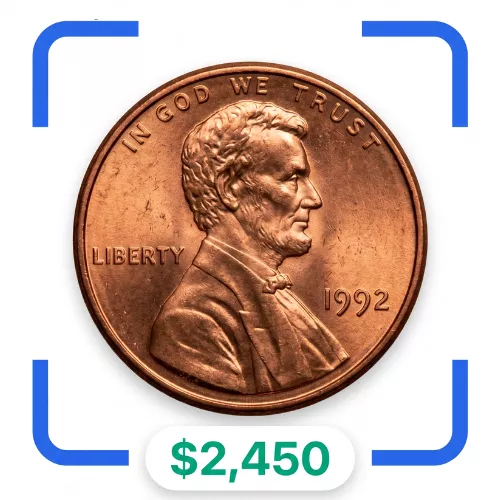


The 1960 Lincoln cent from the Philadelphia Mint has a special place in modern coin collecting.
Mint workers modified the master hub early in 1960 because the original date design caused production issues.
This mid-year change resulted in two distinct versions for collectors to hunt.
The earlier style is known as the Small Date variety.
The later style is called the Large Date variety.
Philadelphia coins carry no mint mark under the date.
When collectors first noticed the difference in 1960, it sparked a national collecting craze.
People sorted through bags of pocket change hoping to find the scarcer Small Date variety.
Finding a classic copper penny that retains its original bright red luster makes it even more special.
Heritage Auctions sold a premier example of this coin for $9,775.
That winning bid came across the block during an auction in November 2013.
Professional coin authenticators graded this specific piece as MS-67 Red.
The "MS" stands for Mint State, which means the coin never saw actual circulation.
The number 67 sits on a strict grading scale that tops out at 70.
A grade of MS-67 means the coin has a superb strike with almost zero visible marks or scratches under magnification.
The "Red" designation confirms that the copper surface retains nearly all of its original mint color rather than turning brown with age.
Coins preserved at this elite level are extremely scarce and bring strong prices when they appear at public sale.
The 1960 Small Date cent is famous, but it is not rare in low grades.
Millions of them were released into everyday commerce.
The high price tag comes down to condition rarity.
Copper is a very reactive metal that naturally darkens and spots over time.
Most 1960 cents were spent, handled, or stored in humid environments that degraded the surfaces.
Very few pieces survived without tiny contact marks from falling into mint bins or handling bags.
Finding one with a sharp strike and pristine red surfaces is a tough challenge.
Lincoln cent enthusiasts who build top-ranked registry sets compete hard for the few best-preserved pieces.
That intense collector competition drives values into the thousands of dollars for the very top tier.
Average circulated examples found in change are common and worth only a small amount.
You can identify this variety by looking closely at the four digits of the date.
Use a standard magnifying glass or a 5x jeweler loupe to get a clear view.
First, check that there is no mint mark below the date, which confirms it was struck in Philadelphia.
Look at the numeral "1" and the numeral "9" on the coin.
On the Small Date, the digits are noticeably smaller, more compact, and thinner than usual.
The top loop of the "6" is also smaller and does not rise as high as the other digits.
On the Large Date version, the numbers are thicker and the "6" has a taller, rounder loop.
If you want a quick visual comparison on your phone, tools like CoinKnow or Coin Value Checker can help you examine the date style.
Check the surface color under a good desk light to see if it shows full copper red rather than toned brown.
Inspect the field areas around Lincoln's portrait for tiny dings, scratches, or spots.
Remember that only pristine coins certified by a major grading service can reach auction record levels.
Want the short version of all this? the free coin identifier apps tools we tested side by side gives you a price from a photo.
Upload a photo and get an instant value, grade estimate, and error check — no jargon, no sign-up required.