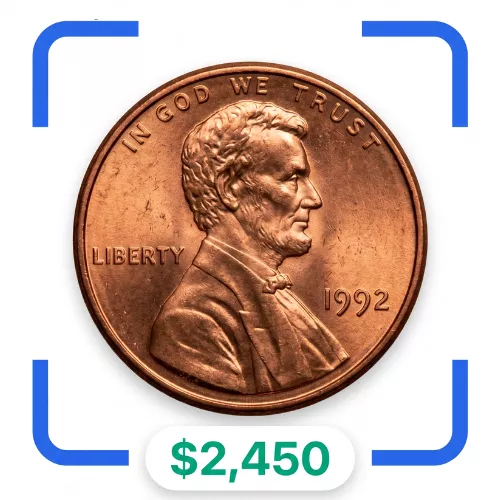


The Denver Mint struck millions of Lincoln pennies in 1961.
This regular-issue coin was made from a traditional bronze alloy weighing 3.1 grams.
The obverse shows Abraham Lincoln, while the reverse features the Lincoln Memorial design.
Most of these pennies ended up in pocket change and wore down quickly.
Finding an early 1960s Memorial cent that still looks fresh from the mint is surprisingly tough.
The "RD" designation stands for Red, which means the coin kept its original bright copper color.
A stunning example of the 1961-D penny sold for $4,406 at Heritage Auctions on 6/14.
The coin earned an elite grade of MS-67 Red from professional graders.
MS stands for Mint State, which means the coin never circulated in daily commerce.
On the 70-point grading scale, a 67 represents a coin with almost no flaws.
You need strong magnification to spot any tiny contact marks on a coin at this level.
Two dedicated collectors drove the bidding up to reach that four-figure price.
High-grade pennies from this era rarely appear at public auction in such pristine condition.
Total mintage numbers do not tell the whole story for early 1960s pennies.
The Denver Mint produced these coins at very high speeds to meet heavy public demand.
Workers packed the fresh cents into heavy canvas bags for storage and transport.
Coins banged into each other inside those bags, leaving nicks and scratches on the surfaces.
Copper also reacts quickly with air and moisture, causing bright red metal to turn brown over time.
Because of these factors, very few 1961-D pennies survived in MS-67 condition with full original luster.
Set registry collectors compete aggressively whenever a top-tier Red example hits the market.
The high price reflects severe condition rarity rather than an overall shortage of 1961 pennies.
Start by checking the date on the front of the coin to confirm it reads 1961.
Look directly below the date for a small "D" mint mark, which shows it was made in Denver.
Weigh the coin on a small digital scale to make sure it matches the standard 3.1-gram copper weight.
Check the color of the coin under a good desk lamp.
To qualify for the Red designation, the penny must show at least 95 percent of its original bright orange-red luster.
Brown or faded red-brown coins carry very little premium over face value.
Use a 10x jeweler loupe to inspect Lincoln's cheek and the Memorial building for bag marks or wear.
Even tiny hairline scratches will drop a coin below the MS-67 grade level.
If you want a fast preliminary opinion on your penny, scanning it with Coin Value Checker can help you spot obvious wear before paying for professional grading.
Remember that worn pocket change from 1961 is worth only face value or its base copper melt.
Only certified coins in nearly perfect condition will reach major auction prices.
If you inherited a box of these, this comparison of every free coin identifier apps worth trying is the sane starting point.
Upload a photo and get an instant value, grade estimate, and error check — no jargon, no sign-up required.